 Quality instead of quantity!
 9,500 independent products
 No mainstream
 No mainstream here




Home bar - What you need for a bar at home!

The dream of having your own home bar - thanks to the pandemic and lockdown, the desire to have your own bar at home has become even greater for many. But whether it's a real bar with a counter and bar stools or a decorative bar trolley - finding the right basic equipment is not that easy. Here you'll find all the tips you need to mix high-quality drinks at home.
Drinks for the home bar
The most important thing when setting up your own home bar is, of course, the right drinks. There are a few basic rules that you can follow:
1. quality before quantity
As with everything, when buying spirits and mixers for your own bar, it's better to buy good than a lot. This doesn't mean that you have to buy the most expensive of every drink. The price is not necessarily decisive for the quality of a drink. But if you want to mix high-quality drinks with great flavors, you shouldn't fall back on cheap booze.
When buying drinks, pay attention to the selection and origin of the ingredients and the special features of the processing. The more you can find out about how the drink is made, the better. Can't find any information about the product? That should be informative enough - hands off!
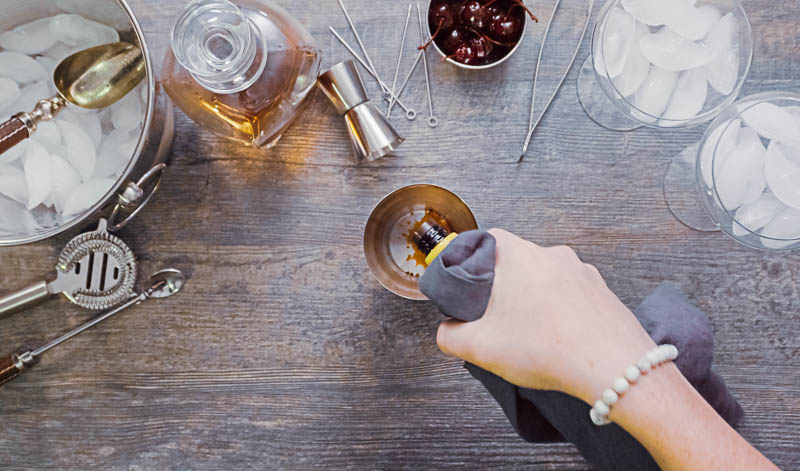
Of course, what you need for your home bar also depends on your personal preferences.
2. buy drinks from the mid-price segment for your home bar
If you're just starting out with mixing cocktails, you shouldn't go for the expensive specialty products straight away. It's better to start with a few classic products from the mid-price segment. Whether gin, whisky, rum or vodka - thanks to the enormous range of small and regional producers, you can also find really high-quality products here. They are perfect for getting started in the world of cocktails - and it won't hurt your wallet too much if a drink goes wrong.
3. less is more!
You don't need to have every spirit in your home bar. If you mainly mix for yourself and you don't like whisky anyway, you don't need whisky on the shelf. It's better to buy specialties as and when you need them rather than on spec. Otherwise you'll soon have more dust catchers in your bar than you'd like. And getting the stuck bottle of brandy out of the cupboard years later isn't really fun.
Especially when buying alcohol for your home bar, it's better to buy a few bottles than one of each type.
Buying drinks for the home bar as and when you need them is a really good start. But if you want to mix your way through the world of cocktails, you don't want to have to go back to your local liquor store or place a new order online for every bottle. That's why we have a few recommendations for you on which drinks you should definitely have in your home bar.
Alcoholic drinks for your home bar
We know very well: the choice of alcoholic drinks is huge. But fortunately, there are some basic spirits that you can use to mix up a variety of delicious cocktails:
- Gin: a classic London Dry Gin is perfect for mixing. If you want a little more flavor for cool gin and tonic variations, get a New Western.
- Vodka: A premium vodka is the perfect base for cocktails such as Moscow Mule, Cosmopolitan, Bloody Mary & Co. It should be premium because these vodkas are filtered several times - so there are fewer fuselic substances and more pure vodka flavors in your drink.
- Whisky: A bourbon or rye whisky is perfectly adequate to start with. These milder whiskies are perfect for many cocktail variations.
- Rum: Rum is a common base ingredient in many cocktails. You should therefore get one brown rum and one clear or white rum for your bar. When brewing rum, make sure that no sugar couleur has been used - this is a colorant and indicates that the rum is of inferior quality!
- Vermouth: Red vermouth is a must in every home bar! No Negroni, no Manhattan, no Bronx cocktail without it. Martini fans should also get themselves a white vermouth (also known as dry vermouth). Incidentally, it can also be enjoyed neat.
- Bitter liqueurs: These include the classic brand names Campari and Aperol. These bitter liqueurs are the standard ingredient in many cocktails. However, there are also high-quality Campari alternatives from small manufacturers that far surpass the quality of mass-produced products!
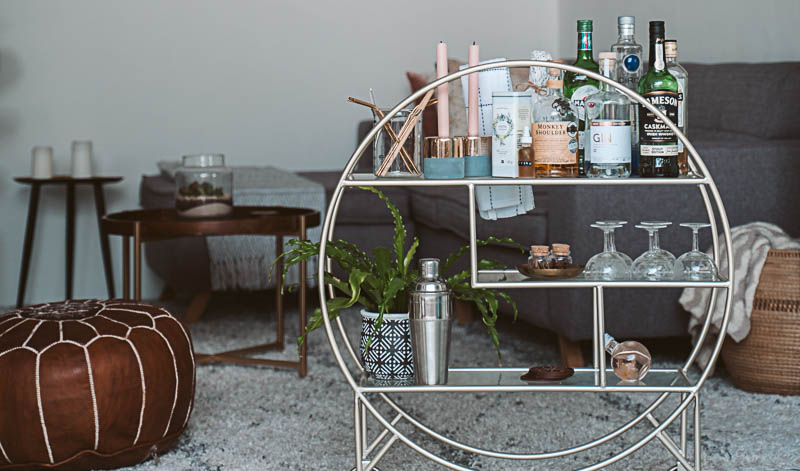 Whether for the mobile home bar or the fixed counter in the party cellar, a basic selection of a few alcohols is enough for many cocktail variations.
If you put these six types of spirits in your home bar, you can already do a lot with them. However, there are also ingredients that are used less frequently, but in cocktail classics such as the Caipirinha or Cosmopolitan. Think of these alcohols as optional additions to your basic equipment:
- Cointreau: an orange liqueur that belongs in the Cosmopolitan or Ladykiller, among others.
- Blue Curaçao: Also an orange liqueur, but this time in blue. Indispensable for the swimming pool or Blue Lagoon.
- Cachaça: A liqueur made from sugar cane must and a fundamental ingredient of the caipirinha.
- Tequila : Margarita or tequila sunrise fans should definitely also buy a tequila blanco, i.e. a white tequila.
- Sparkling or semi-sparkling wine: It never hurts to have a bottle of sparkling wine or Prosecco on hand. A splash of sparkling wine adds the finishing touch to many cocktails!
Juices & sodas for mixing cocktails & long drinks
What many people often forget: For cocktails, a well-stocked home bar not only needs alcohol, but also juices, syrups and fillers. However, as the selection here is almost as large as the range of spirits, we have a few recommendations for you here.
Juice
Generally speaking, the fresher the juice, the better. That's why it's best to use direct juices (also known as mother juices) or home-pressed juices for your home bar. You should avoid so-called fruit juice drinks or nectars, which generally only have a very low fruit content. Exception: fruit products that are so viscous that they could hardly be processed as direct juice. Banana nectar is therefore perfectly acceptable.
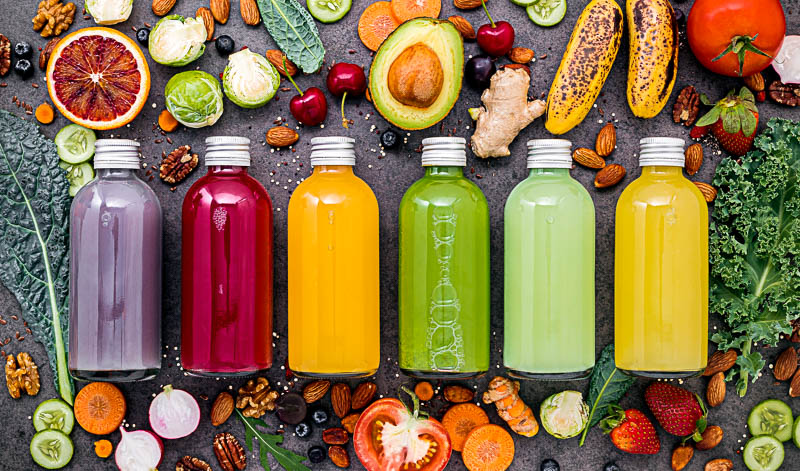
Fresh juices are a must in every home bar.
If you want to taste your way through the cocktail scene, you should definitely have the following juices to hand:
- Orange juice
- lemon juice
- lime juice
Bartenders also often use cranberry juice, pineapple juice and pomegranate juice. However, as juices don't keep for very long, you should only buy them when you really need them.
Syrup
What is syrup and how is it different from juice, you ask? Syrups are fruit or herbal juices that have been preserved with sugar and are therefore generally much sweeter and thicker than direct juices. Their advantage: they last much longer than fresh juices, can be used in a variety of ways and sometimes act as a sweetener with a special kick. You can now fill your home bar with syrups in all colors and flavors.
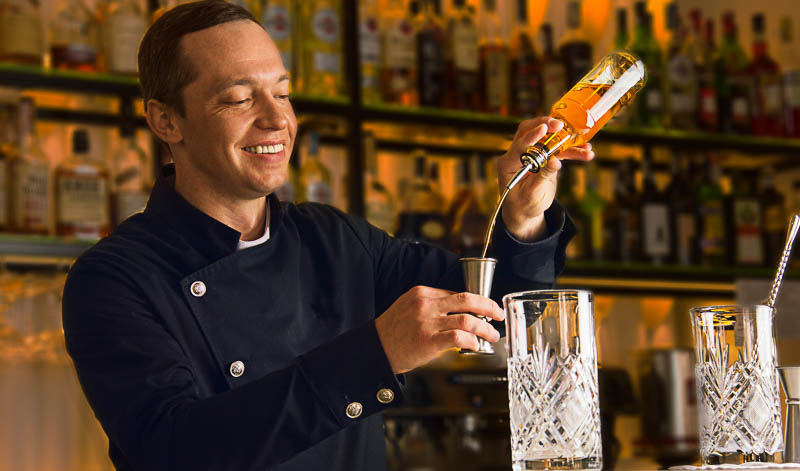
Many cocktails rely on syrups. You can also make them yourself.
If you want to make sure that the syrup only contains the ingredients you want to taste, you can of course make it yourself. Essentially, syrup is made according to the following ratio: 1:1:0.5 - for example, 1 kg of fruit + 1 liter of water + 0.5 kg of sugar.
The ratio should be adjusted depending on how sweet and/or watery the fruit used is. In some cases, this requires a little finesse - or the right recipe. In some recipes, citric acid is added to extend the shelf life of the syrups - and to spice up the taste a little.
As a basic syrup, you can always buy a simple sugar syrup (also known as purified sugar) or prepare it yourself. This is used in many cocktails anyway - and can serve as a quick substitute if you don't have a particular syrup to hand.
Filler
As with juices and syrups, the choice of suitable filler basically depends on the recipe of the cocktail you want to mix. However, it is always a good idea to have the following fillers in stock in your home bar:
- Tonic water(preferably classic, i.e. not too mild)
- Soda (i.e. water with fizz)
- cola
- Bitter lemon
- Ginger ale
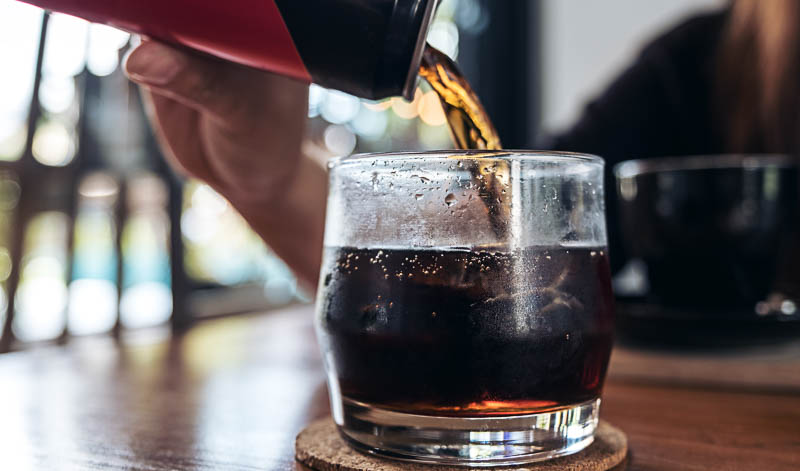
Cola, tonic water, ginger ale - it never hurts to have fillers in stock.
If you are particularly fond of creamy cocktails, you should always have some cream, milk and coconut milk on hand.
For non-alcoholic cocktails
Do you want to prepare delicious cocktails for guests who don't drink alcohol? Then put a few non-alcoholic spirits on the shelf! You can use them to make great mocktails and virgin cocktail variations quickly and easily.
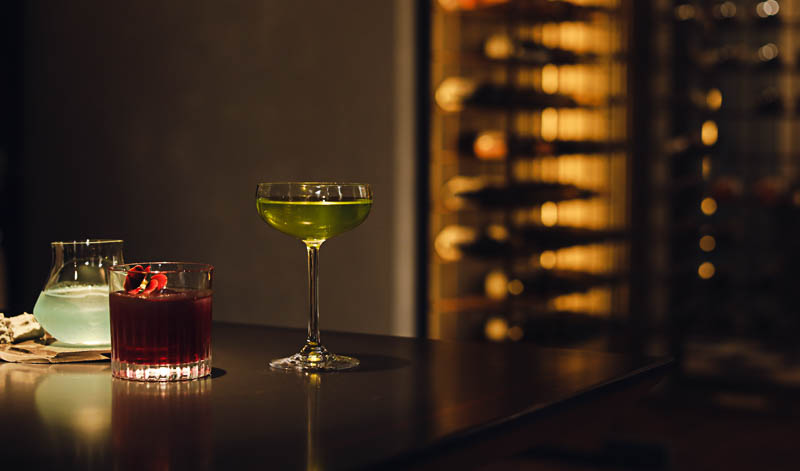
For non-alcoholic cocktails, you can simply put non-alcoholic spirit alternatives on your shelf.
You can find recipes & inspiration for alcohol-free cocktails here: Alcohol-free cocktails - 15 recipes to enjoy without alcohol
Alcohol-free gin, rum, vodka & co. Buy alternatives:

- Manufacturer: Wind Chimes Manufacture
- Flavor: spicy, fresh, citrus note

- Manufacturer: NONA DRINKS
- Flavor: fruity-spicy

- Manufacturer: Wind Chimes Manufacture

- Manufacturer: Quarantini
- Flavor: fruity, herbal, aromatic
Utensils & accessories for the home bar
Now that you've found out which drinks are best to fill your home bar with, you still need the right equipment. Here you can find out what you should definitely have in your bar.
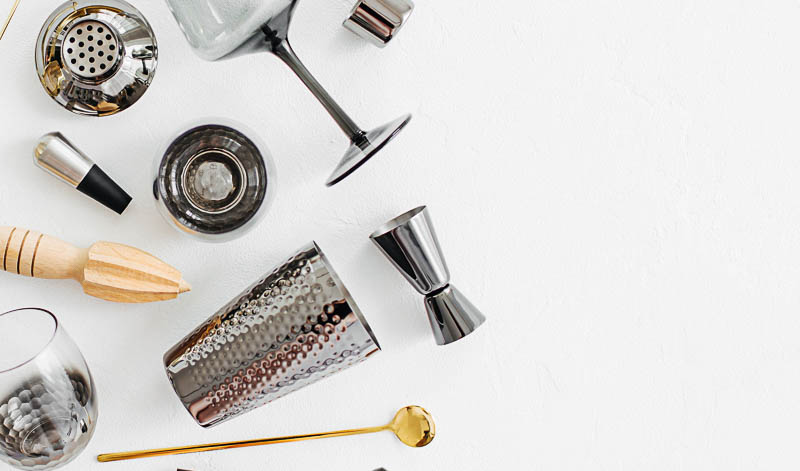
When it comes to mixing accessories at home, it's best to use stainless steel materials
Utensils behind the bar
You don't need much to mix and serve cocktails. If you're just getting into the mixology scene, you should get the following utensils:
- Shaker: the pros swear by Boston shakers - a stainless steel and a glass cup that are inserted into each other at an angle. For home use, however, a cobbler is perfectly adequate. These are the typical stainless steel cups that already have an attachment with a spout and integrated strainer.
- Strainer: If you have a cobbler, you don't really need another strainer. Everyone else can buy a Hawthorne strainer: with its coarse perforation and the spirals attached to the side, it also catches unwanted pulp. However, a standard household fine sieve will also do the job.
- Jigger: You should definitely get yourself a classic bar measuring jug. It allows you to quickly and easily measure out 2 or 4 cl - the basic units of cocktail preparation, so to speak.
- Bar spoon: Practical for cocktails that need to be stirred. By the way, you don't need an extra mixing cup - your cobbler will do!
- Pestle : A pestle is essential for crushing fruit. However, you should not necessarily use the standard version made of untreated wood - these are not only unhygienic, but also easily damaged. It's better to spend a few euros more and get a stainless steel one - the same applies to all other utensils.
- Chopping board & knife: A decent chopping board and a good knife are essential for preparing fruit.
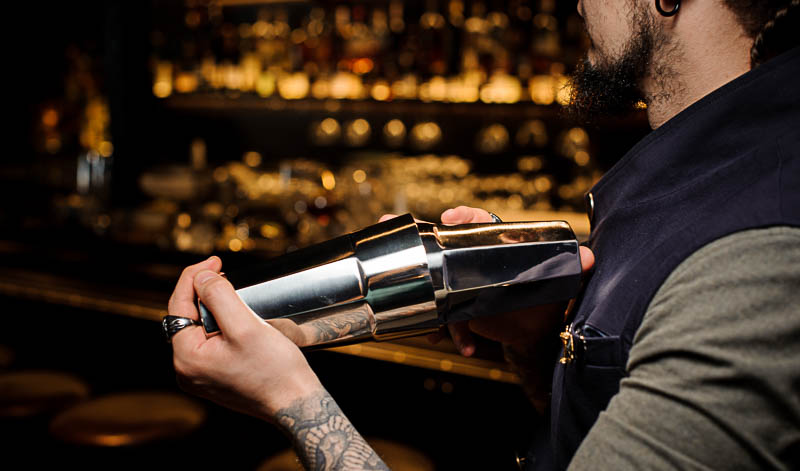
In a Boston shaker, two cups are inserted into each other.
With these utensils, you are definitely well equipped for preparing cocktails in your home bar. But what about glasses?
In principle, three types of glass are sufficient for a wide range of cocktails:
- Tumblers: small, wide glasses with a thick base. Suitable for pure whisky enjoyment and cocktails such as Negroni, Old Fashioned or short drinks
- Highball/long drink glass: narrow, tall glasses. Suitable for pretty much all long drinks and some cocktail variations.
- Martini glass/coupette: the upside-down trapezoidal glasses with their long, narrow stem are probably the epitome of the cocktail glass in terms of style. They are ideal for short drinks and attractive cocktail variations such as the White Russian. If you have champagne flutes at home, you can also use them.
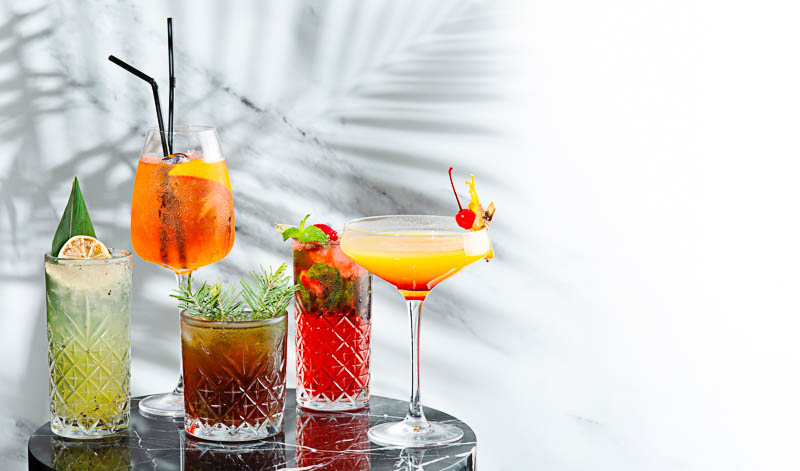
If you have tumblers, long drink glasses and champagne or cocktail bowls at home, you are well equipped on the glassware front.
What you shouldn't forget: straws! These are now also available in glass and stainless steel - not only sustainable, but also pretty to look at.
Your bar is set up and you just need some recipe inspiration? Take a look here: Cocktail recipes with gin
Matching products to the article
About the autor:

Katalog & Marketing Managerin

Für mich geht nichts über das Entdecken kleiner Manufakturen. Ob das der Micro Craft Brauer aus Bayern oder die sächsische Brennerei ist, die es bereits seit Jahrzehnten gibt - hauptsache klein, regional verwurzelt und mit Sinn für's Handwerk!
- Liebt: frische Luft, ihren Hund & Vinyl
- Favorite drinks: wechseln mit so ziemlich jedem Glas...
- Empfehlung des Monats: Alkoholfreier Gin. Der EASIP Fields holt den Frühling ins Glas!
Recent articles
-
18 JulFrom Whiskey to Delicatessen to Coffee: Why Some Gifts Are Still Remembered Years Later
-
28 JunVintage Lamps as an Interior Design Trend
-
25 JunHausberg Single Malt Whiskey for Collectors and Connoisseurs—the second cask has arrived!
-
21 MarTea or coffee? A world map of hot beverage enjoyment
-
24 FebCoffee drinks from A to Z: The big encyclopedia of all coffee drinks
-
17 FebAll about table salt: Fleur de Sel, sea salt, rock salt & co. - differences, origin & use
-
07 JanDirect juice meets carbon dioxide - why PENG doesn't want to be a soft drink
-
27 AugBetween needle & nose: tattoos, dragons and bananas in a jar
-
03 JulOrange disco on the tongue: the founding story of Satoshi Spirits


