 Quality instead of quantity!
 9,500 independent products
 No mainstream
 No mainstream here




All about lemonade - a world-famous classic

The most important facts summarized for you
- All lemonades are based on a mixture of sugar, water and lemon juice.
- In industrial production, only citric acid can be used.
- The minimum sugar content of a manufactured lemonade must be at least 7%. This makes lemonades small calorie bombs.
- However, lemonade is also very easy to make yourself - and can be prepared with a wide variety of ingredients.
Hardly any other drink is as famous and as often misunderstood as lemonade. It's high time to give this classic drink the attention it deserves.
Buy high-quality lemonades from small manufacturers

- Manufacturer: GUA-DRINKS

- Manufacturer: PENG direct juicessodas
- Flavor: refreshing and tangy, orange

- Manufacturer: PENG direct juicessodas
- Flavor: refreshing and tangy, lemon

- Manufacturer: PENG direct juicessodas
- Flavor: refreshing and tangy, orange

- Manufacturer: PENG direct juicessodas
- Flavor: refreshingly tangy, lemon

- Manufacturer: Limoment
- Flavor: refreshing and tangy, rhubarb, elderberry

- Manufacturer: Limoment
- Flavor: refreshing and tangy, rhubarb, elderberry

- Manufacturer: Limoment
- Flavor: refreshing-tangy, fruity, spicy, cherry, woodruff

- Manufacturer: Limoment
- Flavor: refreshing-tangy, fruity, spicy, cherry, woodruff

- Manufacturer: Limoment
- Flavor: fresh, crisp apple, aromatic mint, fine lemongrass

- Manufacturer: Limoment
- Flavor: fresh, crisp apple, aromatic mint, fine lemongrass

- Manufacturer: Limoment
- Flavor: Sweet and sour currant, subtly spicy rosemary

- Manufacturer: Limoment
- Flavor: Sweet and sour currant, subtly spicy rosemary

- Manufacturer: Limoment
- Flavor: floral, berry, apple, elderberry, rose

- Manufacturer: Limoment
- Flavor: floral, berry, apple, elderberry, rose
All lemonades are based on water, sugar and a certain amount of citrus fruit. Some varieties contain additional flavors, but these must always be of natural origin. Almost all varieties are carbonated during preparation and drunk chilled. Lemonades are popular soft drinks, but are also used in cocktails.
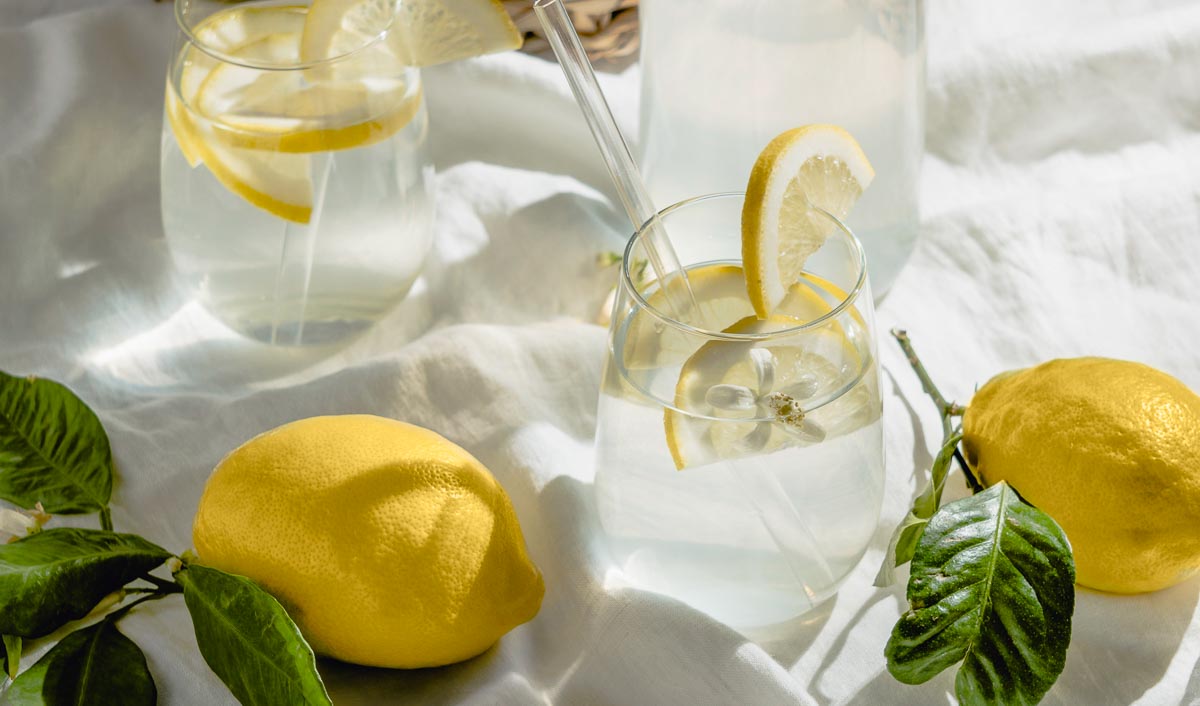
The main ingredients of lemonade: water, sugar & lemons
What exactly is lemonade?
Literally speaking, lemonade is lemon water. The term first appeared in the 17th century and was adopted into German from the French language. The original ingredients
- Water,
- sugar and
- lemon (juice)
are still an essential part of lemonade today. You can easily check this by looking at the list of ingredients. No matter what type of lemonade you buy and which variety you prefer: the main ingredients are still the same today as they were in the past. However, they can vary by using other citrus fruits or just citric acid instead of lemons. Other ingredients are permitted, but must all be of natural origin. This condition distinguishes lemonade from the closely related fizzy drink, which may also contain synthetic flavorings.
However, this should not hide the fact that lemonades are small calorie bombs. Their sugar content is at least seven percent; otherwise the term "lemonade" is not permitted. Many preparations exceed the minimum required sugar content, so you have to include the drinks in your daily diet as a source of energy. Their remaining nutritional value is negligible. Only when it comes to vitamin C can lemonade score points, as it contains an average of 3.9 mg per 100 ml. This is more than a third of the amount that prevents serious deficiency symptoms.
We also have many low-calorie drinks in our range!
Lemonade - making it yourself vs. industrial production
The process of making lemonade is relatively similar both at home and in industrial production. First, a lemonade base is produced. A syrup is made from fruit (or fruit essence) and sugar , which is then diluted with water. Carbon dioxide is then added to the drink.
While stabilizers or preservatives are usually added during industrial production so that the lemonade remains drinkable for a longer period of time, you can do without unnecessary additives when making lemonade at home - and also adjust the sugar content individually. Here we have a basic recipe for you, which you can easily modify to suit your taste.
Basic recipe: make your own lemonade
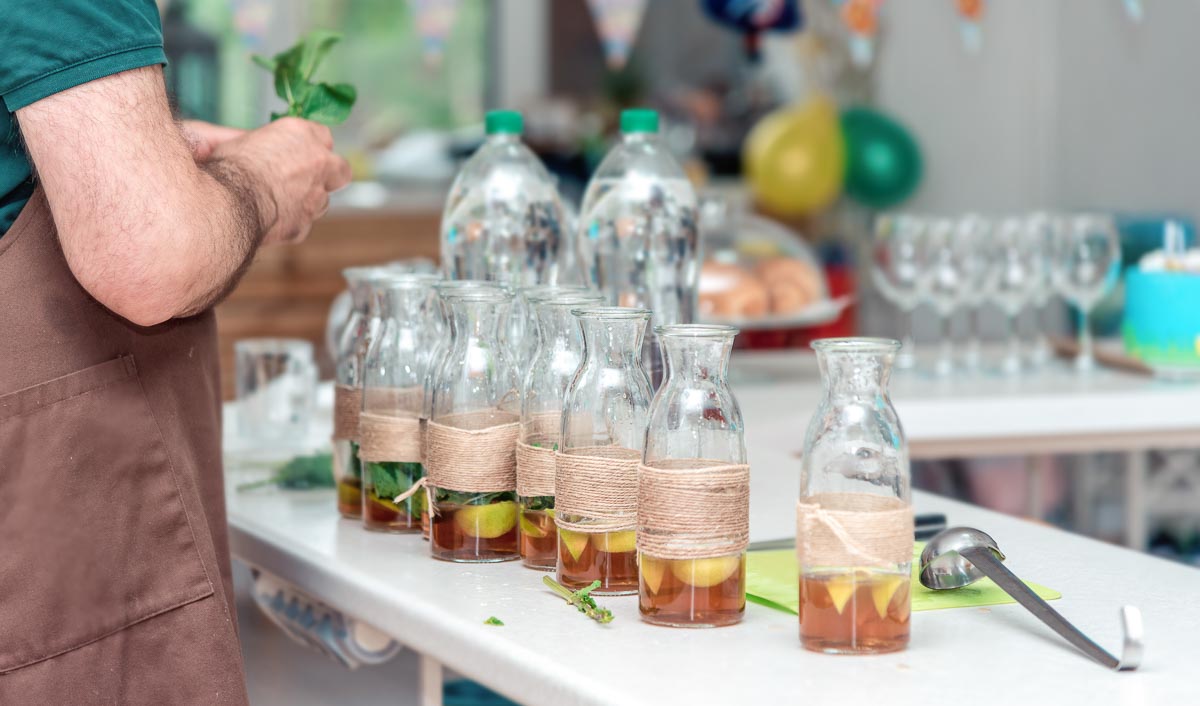
You can also easily make your own lemonade
Ingredients (for approx. 1 liter):
- 150 ml lemon juice (freshly squeezed)
- 30-50 g sugar
- 1 liter of water
- 1 pinch of salt
- Optional: fruit or herbs of your choice
Preparation:
- First, make a syrup. To do this, pour half of the water, sugar and salt into a pan and bring to the boil until the sugar has completely dissolved. Leave the syrup to cool completely.
- Then mix the syrup with the fruit. For a classic lemonade, simply use lemon juice. However, you can also puree the berries and mix them in or add herbs. You can also use lime juice or the juice of another citrus fruit instead of lemon juice. Just make sure that depending on which ingredients you add to your lemonade, you may need to adjust the amount of sugar syrup.
- Now fill your lemonade base with cold water. You can use tap water, mineral water or sparkling water. You can also give your lemonade a special kick by adding cold green or black tea, for example. There are no limits to your imagination here.
- Finally, you can serve your lemonade with ice cubes and add some fresh fruit or herbs for decoration. It's that easy to make your own summery lemonade refreshment!
By the way: For a sugar-free lemonade, you can also simply leave out the sugar syrup. Your lemonade may then have a little more acidity, but it will be all the more refreshing.
What are the most important types of lemonade?
What is a must-have naturally depends on your preferences and how you plan to use the drink. The following list should therefore not be seen as a ranking, but as an aid to a rough classification of the numerous types of lemonade:
Fruit lemonade
- has always been THE prototype of all lemonades
- refreshing, sweet, sour or tart, depending on the fruit used
- the types of fruit used must be labeled
- no colorants may be added to the "lemon" variety
- the "apple" variety may contain sugar couleur
Are you looking for fruity lemonades? Take a look here!
Spiced and/or herbal lemonade
- contains spices and/or herbs instead of or in addition to fruit
- usually only aromatic, no health-relevant effect
- the seasonings used must be labeled
- may contain sugar couleur
- the best-known representative is ginger ale with extracts of ginger root
Are herbal lemonades more your thing? We have a selection for you here!

Cola is also a lemonade
Cola
- is an invention of the US pharmacist John Stith Pemberton
- contained a cola nut variety containing cocaine until 1903
- From 1902, the non-alkaloid extracts of coca leaves were increasingly used as flavoring agents
- other typical flavoring agents are vanilla, lemon, cinnamon and clove oil
- the caffeine content must be at least 65 mg/l and must not exceed 250 mg/l
- Sugar couleur is prescribed/permitted as a colorant
Want to know more about cola? We have summarized everything you need to know about cola here.
Tonic water
- originated as a prophylactic against malaria
- was part of the standard equipment of European colonial armies until well into the 20th century
- contains at least 15, but no more than 85 mg quinine (a bitter substance from the bark of the red cinchona tree) per liter
- can have a negative effect on the course of pregnancy, the baby and existing neurological disorders
Would you like to find out more about tonic water? Under What is tonic water? we have all the information about the iconic filler for you!
Fermented lemonade
- Contains lactic acid cultures
- has a very refreshing effect
- has a slightly sour, tangy taste
- Can be flavored with additional fruit
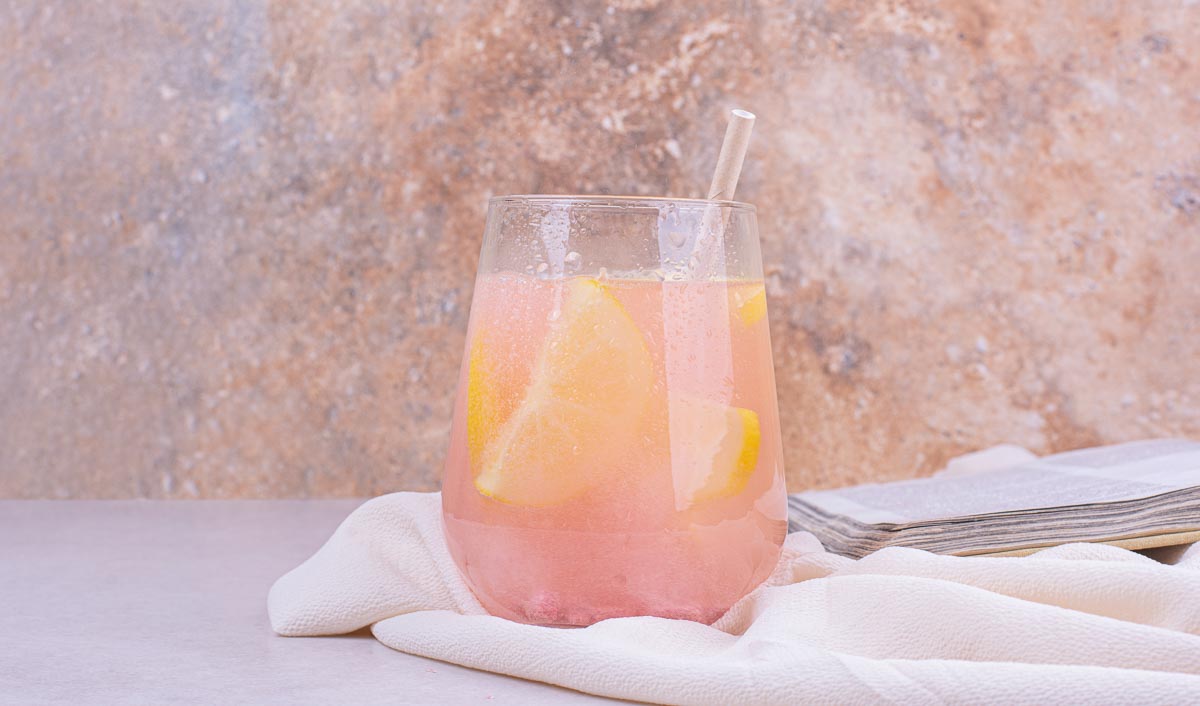
Whether fermented, with herbs or purely fruity - there are lemonade varieties for every taste!
How do you drink lemonade?
All the lemonade varieties mentioned and their individual representatives are intended as soft drinks for pure enjoyment - usually well chilled. Many have also made a name for themselves as cocktail ingredients and are inextricably linked with the respective drink. Certainly the best-known example of this is the gin and tonic. But cola also enjoys great popularity in mixing - whether in partnership with beer and red wine or as a filler for rum, whisky and brandy.
You see or read: Good old lemonade is more varied and versatile than you might think. Try our range of lemonades and discover even more new things about a formative player in the history of beverages.
Matching products to the article
About the autor:

#goteam
Some things can only be accomplished as a team. Just like this article here! That's why we mark all jointly created articles as editorial contributions. Cheers!
- Liebt: nerdy food & drinks knowledge
- Favorite drinks: Tasting packages! You can enjoy them together
- Empfehlung des Monats: Try our various food boxes
Recent articles
-
21 MarTea or coffee? A world map of hot beverage enjoyment
-
24 FebCoffee drinks from A to Z: The big encyclopedia of all coffee drinks
-
17 FebAll about table salt: Fleur de Sel, sea salt, rock salt & co. - differences, origin & use
-
07 JanDirect juice meets carbon dioxide - why PENG doesn't want to be a soft drink
-
27 AugBetween needle & nose: tattoos, dragons and bananas in a jar
-
03 JulOrange disco on the tongue: the founding story of Satoshi Spirits
-
25 JunFrom retirement project to gourmet institution: the colorful world of the Deheck distillery
-
19 JunHonest voices, real brands: buyers and their choices
-
10 MayClimbing design for children's rooms: Which materials and designs are ideal?


