 Quality instead of quantity!
  9,500 independent products
  No mainstream
  No mainstream here



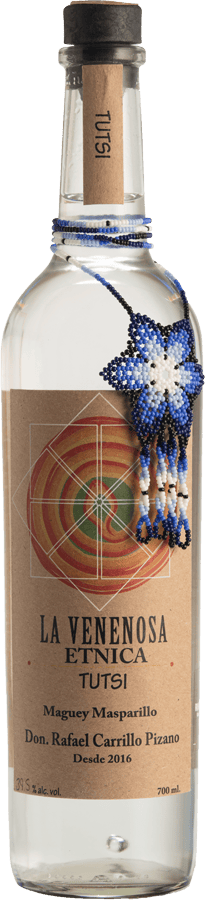


More information about La Venenosa Etnica Tutsi
La Venenosa Etnica Tutsi Maguey Masparillo: Mexico's high-proof cultural asset
When you enjoy this agave brandy, you are enjoying Mexican history. And in the truest sense of the word. With Etnica Tutsi, La Venenosa has succeeded in rediscovering a centuries-old indigenous recipe and production process that was thought to have been lost. It comes from the Huicholen, an indigenous people in the northwest of Jalisco. La Venenosa founder Esteban Morales got to know the family that preserved the historical knowledge of the spirit. Together they brought it back to life in the form of Etncia Tutsi. The traditional agave spirit is produced once a year in very small quantities. Almost as archaic as it was hundreds of years ago. The result is a complex product with woody and citrus notes that complement each other wonderfully. We are really happy to have this product in our portfolio.
| Contents: | 0,7 Liter |
| Beverage type: | Spirit |
| Country: | Mexico |
| Place: | San Juan Espanatica |
| Manufacturer: | La Venenosa |
| Distributor: | BoozEmbassy, Pelzl & Pelzl GmbH, Erlenweg 5, AT-8652 Kindberg |
| Food companies: | Destilleria Porfidio S.A., Puerto Vallarta, Jalisco, Mexico |
La Venenosa
La Venenosa erforscht die Vielfalt der Agavendestillate im Bundesstaat Jalisco, der die größte biokulturelle Vielfalt an Mezcal beherbergt. Mit sieben verschiedenen Destillaten, die aus neun Agavensorten gewonnen werden, bietet La Venenosa einen einzigartigen Einblick in die Region. Diese Destillate umfassen unter anderem Vino del Cerro (aus wilden Magueys der Bergregion), Vino de Olla (in Tongefäßen hergestellt), Vino Barranca (aus Maguey aus den Schluchten) und Vino Mezcal (aus gekochtem Mezcal). Raicilla, ursprünglich als „Raicillero-Agavenwein“ bezeichnet, bezieht sich auf das Destillat aus Agavenklonen, die an der Küste von Jalisco wachsen. Im 16. Jahrhundert begann in Jalisco die Produktion von Mezcal, und das Wissen über die Herstellung verbreitete sich in andere Regionen Mexikos. Heute ist der Begriff „Mezcal“ in Jalisco nicht mehr gebräuchlich, um lokale Produkte zu...
Read more


