 Quality instead of quantity!
 9,500 independent products
 No mainstream
 No mainstream here




What is whisky and how is it made?

Whisky originates from Scotland and Ireland (the two nations are in dispute). It consists of three ingredients: Water, grain, yeast. Nevertheless, there are big differences, depending on the water, type of grain and storage.
At and you will find high-quality whisky from small manufacturers!
How whisky is made
'The water of life'. That's what the Scots and Irish call their national drink. Who invented it - they still argue about it today. In any case, whisky took its first steps in Christian monasteries. Because the monks knew how to distil it. Incidentally, Irish whisky is spelled 'whiskey'. And the American product, bourbon, is also spelled with the additional e. All types of whisky are made from water, grain and yeast. Period. A simple and pure drink. And yet full of differences. This is how the typical barley-based Scottish and Irish whisky is created:
- Malting: Soak barley. Spread out to germinate. Dry with hot air. Or over a peat fire - then the whisky becomes 'smoky'
- Fermentation: The malted barley is ground. Slowly heat the malt flour and mix with water. The sugar separates. The added yeast converts the sugar into alcohol
- Distillation: Now the whole thing goes into stills. Copper stills are called pot stills. Cheaper varieties are distilled in column stills. The alcohol separates from the water. At the same time, harmful and unpalatable ingredients evaporate. The more often it is distilled, the stronger the whisky
- Bottling: The size of the cask, type of construction, geographical location of the warehouse, age, previous use of the cask - everything influences the taste of the whisky
- Maturation: Whisky can be called whisky after three years and one day in the cask. The longer the distillate matures, the spicier, more complex and well-rounded it tastes
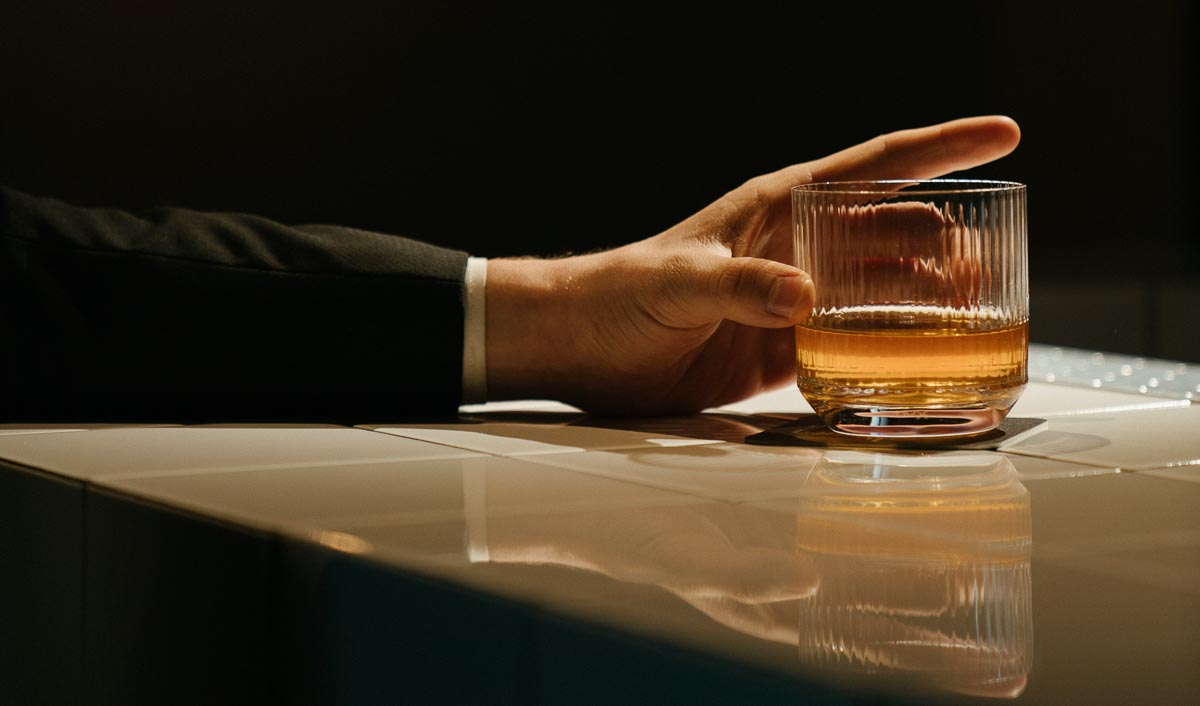
Whisky is traditionally served without ice in a tumbler glass
The most important types of whisky
Single malt
- the best whisky for connoisseurs
- mainly from Scotland
- develops many nuances of flavor with increasing age (fruit, honey, vanilla, wood, tar)
- the Scottish region of Islay produces distinctly smoky, strong, peaty whiskies - the smoky flavor is created by drying the barley over a peat fire
- always comes from a single distillery
- is always distilled in copper stills (pot stills)
Bourbon whiskey
- the American version (with an e): sweeter and stronger in taste than Scotch
- this is due to the basic ingredient corn, which makes up at least 51 percent of bourbon
- is almost exclusively distilled in column stills
- is stored for at least two years in new white oak barrels (hence the vanilla, coconut and caramel notes)
Irish whiskey
- milder than whiskey from Scotland
- Single malts are rare in Ireland; most Irish whiskeys are blends and therefore more balanced, less distinctive in taste
- Distillation mostly in column stills
- Matured for at least three years in wooden barrels (oak is not mandatory)
Rye whiskey
- American whiskey
- the focus here is not on barley or corn, but on rye (formula usually 51% rye, 39% corn, 10% barley)
- only needs to mature in barrels for six months
- Stronger, drier, spicier than bourbon
How do I drink a whisky?
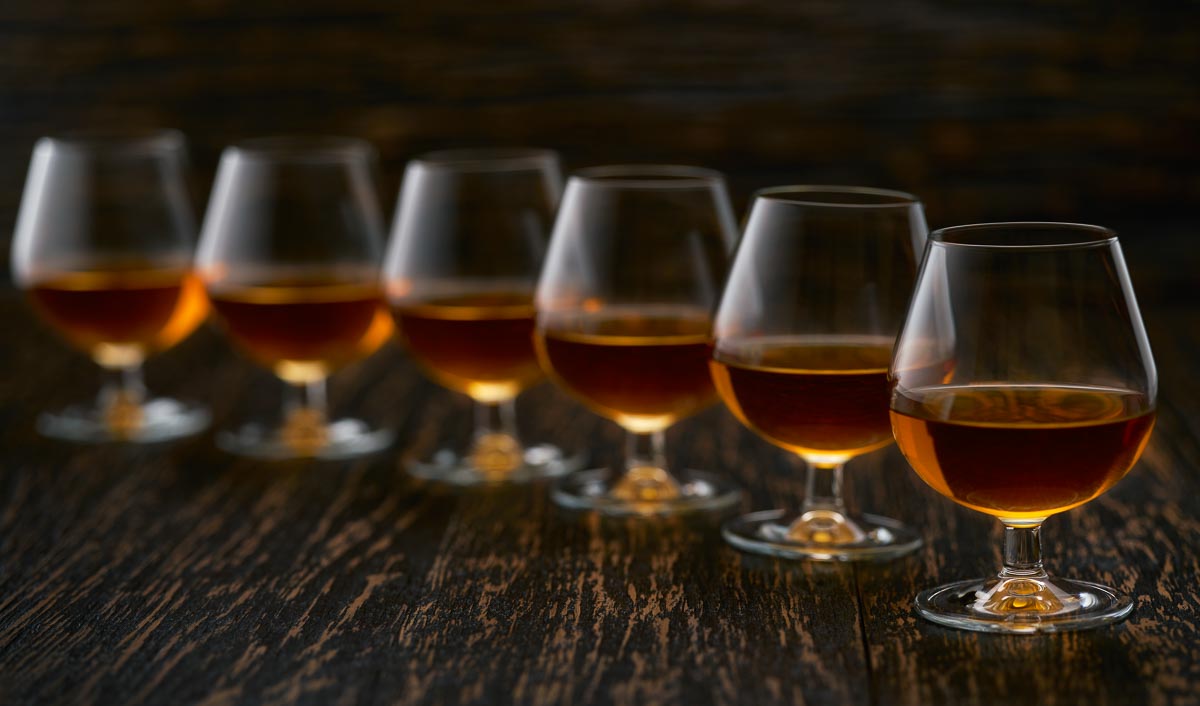
High-quality whiskies are best drunk not from a tumbler, but from a nosing glass
Let's start with the glass. The typical whisky glass is the tumbler with its heavy base. You drink simple whiskies from it. The complex, expensive varieties belong in the nosing glass. This tapers towards the top and sends all the aromas straight to your nose. The drinking temperature is between 15 and 18 degrees. It is best stored in the cellar and not brutally chilled. Even if you know this from movies: Never put ice in your whisky! Too cold, too watered down - ruins the aromas. Alternatively, you can add clear, unchilled water by the teaspoon or pipette to intensify the aromas. Now take a first sip carefully and let the whisky move through your mouth.
The classic whisky cocktail
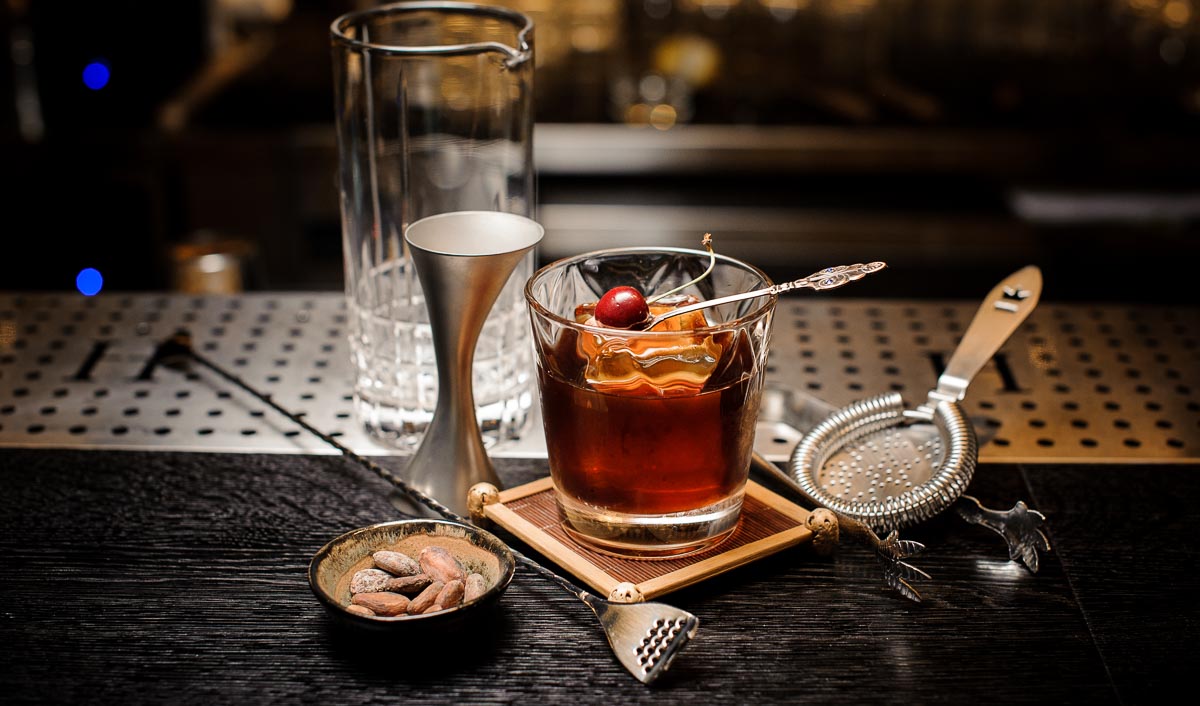
The Manhattan is a classic whisky cocktail - and easy to prepare
Manhattan - the classic cocktail par excellence. It consists of:
- 5 cl whisky
- 3 cl red vermouth
- two dashes of Angostura bitters
The whole thing is stirred, not shaken, and topped off with a maraschino cherry.
Curious after reading this? Thirsty even? The world of whisky is just a click away with us! Whisky range
Matching products to the article
About the autor:

#goteam
Some things can only be accomplished as a team. Just like this article here! That's why we mark all jointly created articles as editorial contributions. Cheers!
- Liebt: nerdy food & drinks knowledge
- Favorite drinks: Tasting packages! You can enjoy them together
- Empfehlung des Monats: Try our various food boxes
Recent articles
-
18 JulFrom Whiskey to Delicatessen to Coffee: Why Some Gifts Are Still Remembered Years Later
-
28 JunVintage Lamps as an Interior Design Trend
-
25 JunHausberg Single Malt Whiskey for Collectors and Connoisseurs—the second cask has arrived!
-
21 MarTea or coffee? A world map of hot beverage enjoyment
-
24 FebCoffee drinks from A to Z: The big encyclopedia of all coffee drinks
-
17 FebAll about table salt: Fleur de Sel, sea salt, rock salt & co. - differences, origin & use
-
07 JanDirect juice meets carbon dioxide - why PENG doesn't want to be a soft drink
-
27 AugBetween needle & nose: tattoos, dragons and bananas in a jar
-
03 JulOrange disco on the tongue: the founding story of Satoshi Spirits


