 Quality instead of quantity!
 9,500 independent products
 No mainstream
 No mainstream here




Climbing design for children's rooms: Which materials and designs are ideal?
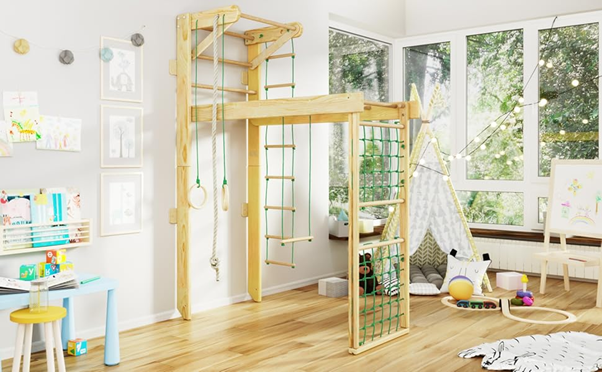
Designing a wall bars in a child's room requires creative planning and careful consideration. Climbing is far more than a simple movement activity - it is a fundamental developmental factor for children, promoting motor skills, spatial awareness, coordination and self-confidence in a holistic way. This comprehensive guide offers detailed insights into ideal materials and innovative design concepts for a safe, inspiring and development-promoting climbing landscape in the children's room.
Material selection for climbing walls
High-quality materials form the foundation of a safe and durable climbing wall. Wood proves to be an outstanding base material - it combines stability, a natural feel and versatile design options. High-quality spelling mistakes or spruce boards with a minimum thickness of 18 mm guarantee the necessary load-bearing capacity and stability. Smooth, splinter-free surfaces, ideally treated with child-friendly, non-toxic varnishes or natural wood oils that protect and care for the material while guaranteeing an attractive appearance, are crucial.
Handle systems and climbing accessories
The choice of climbing holds determines fun, safety and development potential. Modern grip systems offer an impressive variety of options:
- Ergonomic holds made of high-quality polyurethane guarantee optimum grip and support natural hand movements.
- Different grip shapes with varying sizes and profiles challenge and promote motor skills.
- Modular grip sets with different levels of difficulty enable age-appropriate and individually adaptable climbing.
- Removable and adjustable grips allow flexible adaptation to growth and development stages.
- Color-coded grip systems make climbing even more playful and motivating.
These diverse grip options create a dynamic, development-promoting climbing experience for children.
Safety aspects in design
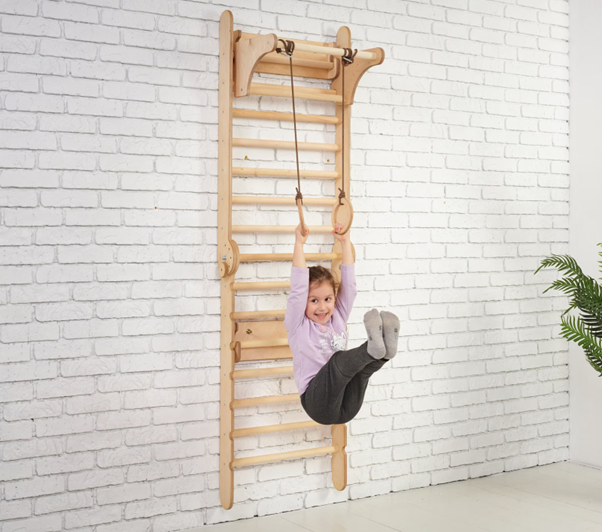
Safety is an absolute priority when designing climbing walls. Statically tested wall attachments that can safely support at least three times the expected body weight are crucial. Professionally designed padding in fall areas, rounded edges and non-slip surfaces minimize the risk of injury. The design should be precisely tailored to age groups - flatter, gentle angles for toddlers, challenging inclines for older children that develop coordination skills.
Individual design concepts
Creative design approaches transform climbing walls from a purely functional element to an aesthetic eye-catcher in the children's room. Individual color schemes, themed designs such as jungle, fairytale or space worlds as well as the skilful integration of additional elements such as slides, hammocks or interactive elements enhance functionality and play value. Harmonious integration into the overall room design, which intelligently combines aesthetics, pedagogy and functionality, is important.
Final thoughts
A well thought-out climbing wall in the children's room transcends the role of a simple play element - it becomes a dynamic development space. With careful planning, high-quality materials and creative design concepts, parents can create an inspiring environment that optimally and holistically supports joy, movement and child development.
About the autor:

Mitgründer von Honest & Rare

Mich begeistern Getränke aller Art. Ob Bier, Gin, Weinbrand, Cold Brew Kaffee oder Limo. Vor allem liebe ich die Kultur, regionalen Bezüge und Herstellung von Getränken. Selbst braue ich ab und an Bier, setze Liköre an und röste Kaffee in der Pfanne.
- Liebt: Rätsel, Poesie, Abenteuer
- Favorite drinks: Whisky, süffige Biere, Limos
- Empfehlung des Monats: Momotaro Ginzero Alkoholfreier Gin
Recent articles
-
21 MarTea or coffee? A world map of hot beverage enjoyment
-
24 FebCoffee drinks from A to Z: The big encyclopedia of all coffee drinks
-
17 FebAll about table salt: Fleur de Sel, sea salt, rock salt & co. - differences, origin & use
-
07 JanDirect juice meets carbon dioxide - why PENG doesn't want to be a soft drink
-
27 AugBetween needle & nose: tattoos, dragons and bananas in a jar
-
03 JulOrange disco on the tongue: the founding story of Satoshi Spirits
-
25 JunFrom retirement project to gourmet institution: the colorful world of the Deheck distillery
-
10 MayClimbing design for children's rooms: Which materials and designs are ideal?
-
09 MayPleasure in harmony: coffee meets cigar


