 Quality instead of quantity!
 9,500 independent products
 No mainstream
 No mainstream here




All about table salt: Fleur de Sel, sea salt, rock salt & co. - differences, origin & use

The most important facts summarized for you:
- All table salts consist of at least 97% sodium chloride - the differences lie in extraction, texture and mineral content
- Sea salt is obtained through the evaporation of seawater, rock salt is mined from underground deposits
- Fleur de sel is a hand-scooped finishing salt with a moist, flaky texture - ideal for refining, not for cooking
- Himalayan salt is chemically ordinary rock salt - the pink color comes from iron oxide, not from special minerals
- Special salts such as smoked salt, kala namak or black Hawaiian salt bring their own unique flavors and visual accents to the plate
- Two to three different salts are recommended for perfect cooking: an everyday salt, a finishing salt and a special salt
Not all salt is the same. Of course, chemically speaking, all table salt consists of at least 97% sodium chloride. But anyone who studies the subject a little quickly realizes that the differences in extraction, texture, mineral content and taste are enormous - and absolutely relevant for connoisseurs. Whether as a finishing salt on a perfectly grilled steak, as a subtle seasoning in everyday cooking or as an exotic eye-catcher on the plate - the right salt can take a dish to a whole new level.
We take you on a little journey through the world of salts: Where do they come from? How are they extracted? And above all: Which salt goes with what?
Sea salt - the classic from the ocean
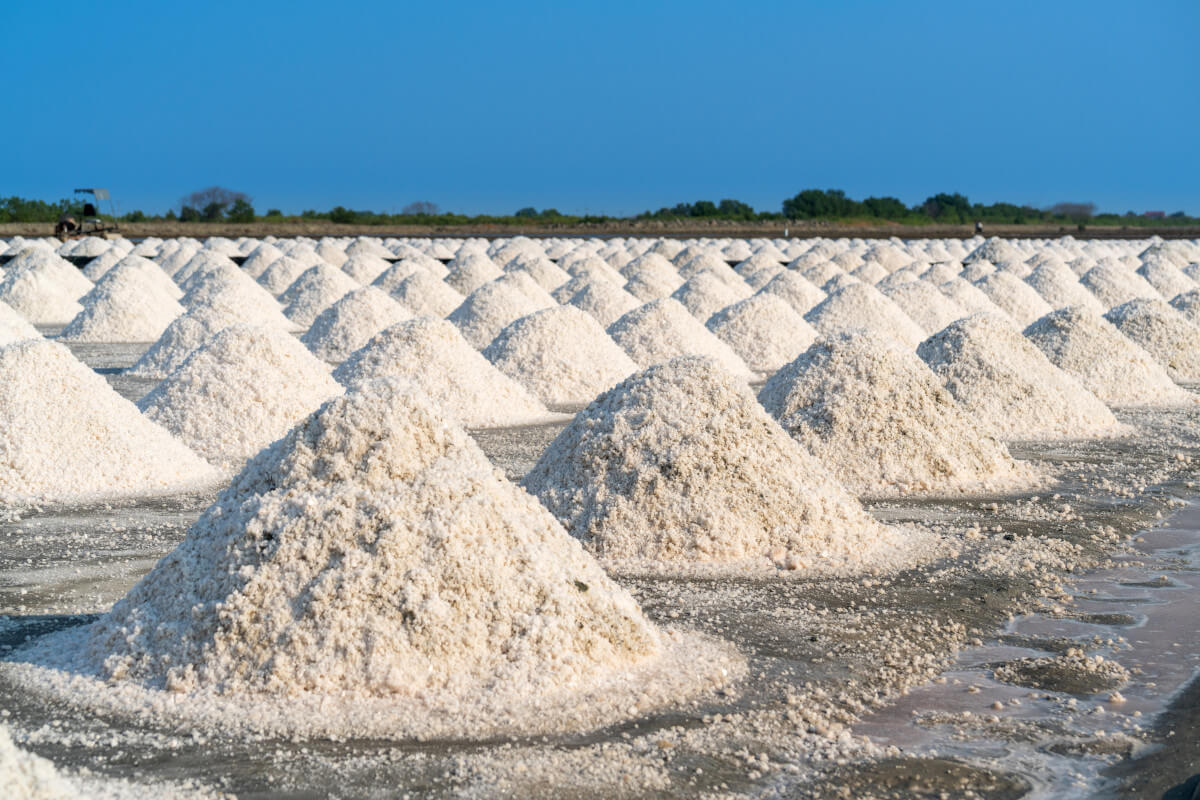
Sea salt is obtained by allowing seawater to evaporate in shallow pools known as salt marshes. The sun and wind do the work until a salt crust remains at the end. This is harvested by machine, dried and sieved. The result: a dry, coarse grain with a slightly mineral character.
Around 20 % of the table salt produced worldwide comes from the sea. In addition to sodium chloride, sea salt contains small amounts of trace elements such as calcium, magnesium, iodine and fluorine - which can give it a slightly nuanced taste depending on its origin. Compared to refined table salt, many sea salts taste a little rounder and less sharp.
Best suited for: Everyday cooking, salt mill, salt crusts on fish or meat, pasta water.
Rock salt - fossil heritage from the depths
Rock salt is basically nothing more than ancient sea salt. Millions of years ago, entire seas evaporated - the salt was left behind and is now stored as a layer of rock deep underground. It consists of the mineral halite and is mined in salt mines or extracted using the so-called boiling process, in which underground brine is pumped to the surface and the water is evaporated.
Rock salt covers around 70 % of the world's salt requirements and, depending on its origin, tastes slightly chalkier and more neutral than sea salt. A major advantage over sea salt: as it is stored deep underground, rock salt has had no contact with modern environmental influences - the issue of microplastics, which is occasionally discussed with sea salt, does not play a role here.
Best suited for: Everyday cooking, soups, sauces, stews, salt mills, wherever salt needs to dissolve evenly.
Fleur de sel - the flower of salt
Fleur de sel is the queen of sea salts - and for good reason. While normal sea salt is harvested at the bottom of the salt marshes, fleur de sel is formed as a wafer-thin layer of crystals on the surface of the water. This only happens on particularly sunny and calm days. The so-called paludiers (salt farmers) scoop off this delicate layer by hand with wooden rakes - a job that requires a great deal of experience and dexterity.
The result is fine, slightly moist flakes with a unique texture: crunchy and delicate at the same time. Fleur de sel has a higher water content than normal sea salt (up to 15 % residual moisture) and contains slightly more calcium and magnesium, which makes for a milder, more complex taste. This is precisely why it should never be ground in a salt mill - the crystals would clump together.
The best-known regions of origin are Guérande and the Camargue in France, the Algarve in Portugal and the coast of Ibiza. The taste and character differ depending on the region: fleur de sel from Guérande is considered particularly intense and mineral, while that from the Algarve is mild and crunchy.
Best suited for: As a finishing salt just before serving over steaks, grilled fish, vegetables, salads, carpaccio - and especially over caramel, chocolate desserts and ice cream. Do not use for cooking, as the fine texture and special taste are lost when heated.
Himalayan salt - the pink myth
The shimmering pink Himalayan salt is a real visual highlight - but the name is a little misleading. This is because the salt does not come directly from the Himalayan mountains, but mostly from the Khewra salt mine in Pakistan, around 200 kilometers southwest of the mountains. In chemical terms, it is simply rock salt. The pretty pink color is caused by small amounts of iron oxide.
In terms of taste, Himalayan salt is comparable to conventional rock salt - mild and slightly chalky. The often advertised health benefits of additional minerals have not been scientifically proven: The trace elements it contains are present in such small quantities that they have no relevant effect when salt is consumed normally. If you value sustainability, it is better to use regional rock salt - for example from Bad Reichenhall or the Alps.
Best suited for: Salt mill, decorative finishing, salt blocks for grilling or serving.
Sel Gris - the gray gold from France
Sel Gris, also known as "gray salt", is the down-to-earth brother of Fleur de Sel, so to speak. It is extracted in the same salt marshes, but - unlike fleur de sel - it sinks to the bottom of the basins, where it comes into contact with clay and sediment. This gives it its characteristic greyish to slightly brownish color and a stronger, earthier taste.
Sel gris from the French Atlantic coast is particularly well known. It is significantly cheaper than fleur de sel, but is still a high-quality, hand-harvested product - and the first choice for many chefs when a characterful all-rounder salt is required.
Best suited for: Cooking, marinades, stews, rustic cuisine, salt crust on bread.
Smoked salt - for those who like it aromatic
Smoked salt is basically sea salt that is smoked over a wood fire - similar to the traditional smoking of fish or meat. Depending on the type of wood used (beech, hickory, mesquite), a unique smoky aroma is created that is reminiscent of a campfire, BBQ or Nordic cuisine.
Danish smoked salt (smoked over beech wood) or American hickory smoked salt are particularly popular. It is a real statement salt that needs to be used sparingly - but is an absolute revelation in the right dishes.
Best suited for: Grilled meat, burgers, smoked salmon, baked vegetables, hearty stews, vegan dishes that lack a smoky flavor.
Kala Namak - the salt that tastes like egg
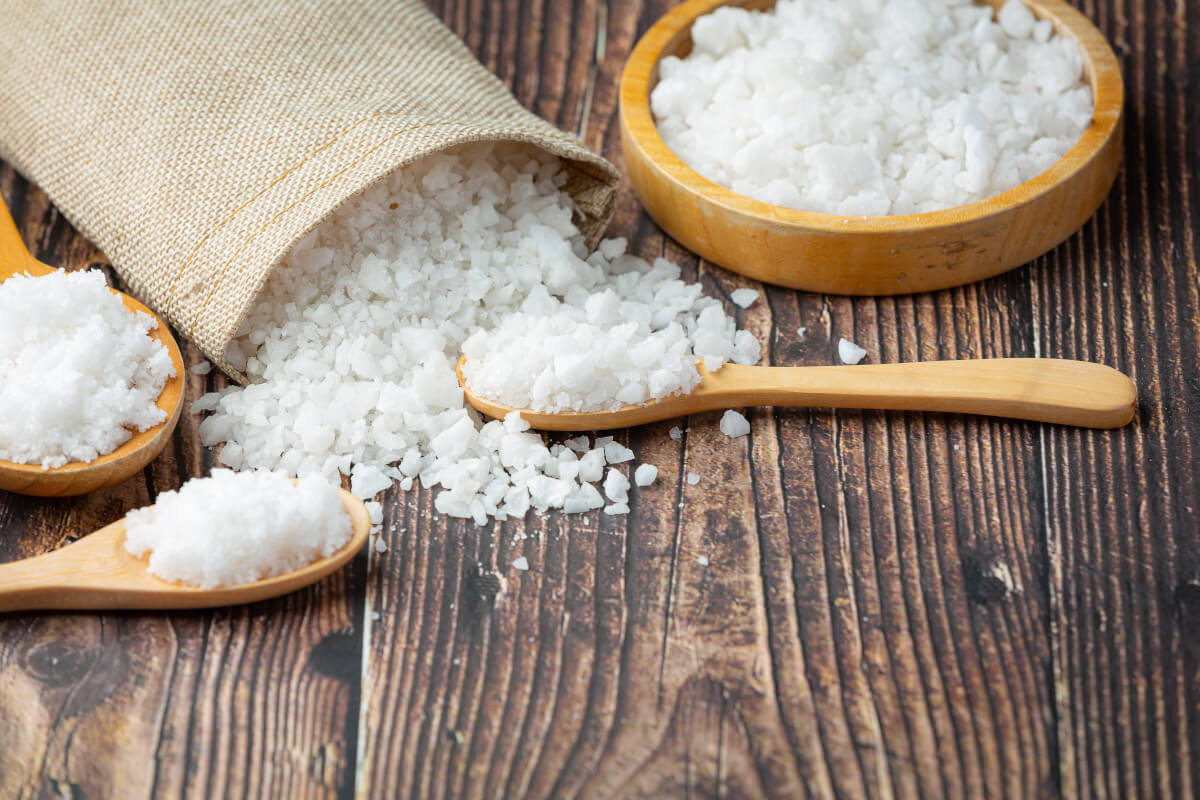
Kala Namak (Hindi for "black salt") is probably the most unusual salt on this list. The rock salt from India and Pakistan is heated with harad seeds and charcoal during production, which produces sulphur compounds. It is precisely these that give it its characteristic smell and taste - which is indeed strongly reminiscent of boiled egg.
The crystals are dark red to purple, ground it is pinkish gray. Kala namak has been an integral part of traditional Indian and Ayurvedic cuisine for centuries - for example in chutneys, chat masala and raitas. In Europe, it has experienced a real hype, especially in vegan cuisine, as it gives tofu scrambled eggs or chickpea flour omelettes an amazingly authentic egg flavor.
Important: Use Kala Namak sparingly! The sulphurous taste can quickly become dominant.
Best suited for: Vegan scrambled eggs, chutneys, Indian dishes, fruit salads, as an exotic accent on avocado dishes.
Black Hawaiian salt - the dark eye-catcher
Pitch black and noble: Hawaiian salt is extracted from Pacific seawater and then mixed with activated charcoal. This gives the salt its striking color and is also said to have a slightly detoxifying effect - even if this is scientifically rather controversial. The taste is mild and subtly mineral, with a hint of nuttiness.
In the Hawaiian tradition, this salt was originally used to preserve fish and meat, but today it is primarily a visually impressive finishing salt that creates a spectacular contrast on light-colored dishes.
Best suited for: Finishing on light-colored fish, mozzarella, carpaccio, sushi - anywhere where the visual contrast comes into its own.
Which salt for what? A brief overview
| Type of salt | Texture | Taste | How to use |
|---|---|---|---|
| Sea salt | Coarse, dry | Mild-mineral | Cooking, salt mill, all-rounder |
| Rock salt | Fine to coarse | Neutral, slightly chalky | Everyday cooking, soups, sauces |
| Fleur de sel | Moist, flaky | Mild, complex | Finishing: steak, fish, desserts |
| Himalayan salt | Coarse, crystalline | Mild, chalky | Salt mill, decorative, salt blocks |
| Sel Gris | Coarse, moist | Strong, earthy | Cooking, marinades, bread |
| Smoked salt | Fine to coarse | Smoky, aromatic | Grilling, BBQ, oven vegetables |
| Kala namak | Fine, powdery | Sulfurous, after egg | Vegan cuisine, Indian dishes |
| Hawaiian salt (black) | Coarse, crystalline | Mild, nutty | Finishing, visual contrast |
Our conclusion: It's worth taking a closer look
Yes, at the end of the day, all salt consists mainly of sodium chloride. But the way it is extracted, the texture and the subtle differences in the mineral composition make a real difference to the taste - especially if you use the salt consciously. A good fleur de sel on a freshly grilled steak, a pinch of kala namak in vegan scrambled eggs or smoked salt over baked vegetables - these are the little details that take a dish from good to unforgettable.
Our tip: stock up on two or three different salts. A solid rock salt or sea salt for everyday use, a fleur de sel as a finishing salt and perhaps a special salt such as smoked salt or kala namak for special occasions. Your kitchen will thank you.
About the autor:

Mitgründer von Honest & Rare

Mich begeistern Getränke aller Art. Ob Bier, Gin, Weinbrand, Cold Brew Kaffee oder Limo. Vor allem liebe ich die Kultur, regionalen Bezüge und Herstellung von Getränken. Selbst braue ich ab und an Bier, setze Liköre an und röste Kaffee in der Pfanne.
- Liebt: Rätsel, Poesie, Abenteuer
- Favorite drinks: Whisky, süffige Biere, Limos
- Empfehlung des Monats: Momotaro Ginzero Alkoholfreier Gin
Recent articles
-
01 JulRare Teas as Collectibles: What Connoisseurs Appreciate
-
28 JunVintage Lamps as an Interior Design Trend
-
25 JunHausberg Single Malt Whiskey for Collectors and Connoisseurs—the second cask has arrived!
-
21 MarTea or coffee? A world map of hot beverage enjoyment
-
24 FebCoffee drinks from A to Z: The big encyclopedia of all coffee drinks
-
17 FebAll about table salt: Fleur de Sel, sea salt, rock salt & co. - differences, origin & use
-
07 JanDirect juice meets carbon dioxide - why PENG doesn't want to be a soft drink
-
27 AugBetween needle & nose: tattoos, dragons and bananas in a jar
-
03 JulOrange disco on the tongue: the founding story of Satoshi Spirits


