 Quality instead of quantity!
 9,500 independent products
 No mainstream
 No mainstream here




Fermenting in honey: tradition meets modern superfoods

The most important facts summarized for you:
- When fermenting in honey, various ingredients are placed in raw honey
- The positive properties of the ingredients are enhanced by the microorganisms they contain.
- Fermented honey can strengthen the immune system, have an anti-inflammatory effect, promote digestion and have antioxidant properties
- Fermented honey can be consumed pure or used as an ingredient in dressings, smoothies or savory dishes
Buy honey

- Manufacturer: Alabasini's Bee Farm

- Manufacturer: Alabasini's Bee Farm

- Manufacturer: Biogea

- Manufacturer: 100pct.

- Manufacturer: Alabasini's Bee Farm

- Manufacturer: Apsogo

- Manufacturer: Alabasini's Bee Farm

- Manufacturer: 100pct.

- Manufacturer: 100pct.

- Manufacturer: 100pct.

- Manufacturer: 100pct.

- Manufacturer: Biogea

- Manufacturer: Kyffhäuser Fruit

- Manufacturer: 100pct.

- Manufacturer: 100pct.
Fermentation is an ancient process for preserving and refining food that has been receiving more attention in recent years. One form that is only slowly becoming known again is fermentation in honey - a technique in which various ingredients interact with the sweet natural product. But what exactly happens when fermenting in honey and what health benefits can this method offer? We have the answers for you - plus two delicious honey-fermented recipes.
What does "fermenting in honey" mean?
Fermenting in honey means that ingredients such as herbs, spices or vegetables are placed in honey so that they are changed and "matured" by the activity of microorganisms. Unlike traditional fermentation of food in brine or water, honey is the main fermentation medium here. Honey not only provides a protective environment against harmful bacteria, but also enhances the natural effect of the fermented ingredients through its own positive properties.
Where does fermentation in honey come from?
Fermentation in honey has a long tradition and has been practiced for thousands of years. The first traces of mead - which is also fermented with honey - can be found in ceramic vessels from northern China dating back to around 7000 BC. Today, it is mainly mead that remains as a honey ferment, although a number of other uses are still known in traditional cuisine in Asian, Mediterranean and Eastern European cultures.
Honey is ideal for fermentation due to its high sugar content and antibacterial properties. Even the ancient Egyptians were aware of the benefits of fermenting in honey, especially for medicinal purposes.
Fermenting ingredients in honey can enhance their health benefits
How does fermentation in honey work?
Honey itself contains too little water to start fermentation processes. By adding water and/or other ingredients, the microflora in the honey is activated - and the fermentation process, in which the microorganisms multiply and decompose other substances, is started.
What can be fermented in honey?
Almost everything that is a natural superfood can be fermented in honey. Ginger, garlic, cinnamon, herbs such as thyme or rosemary are particularly popular, as are various fruits and berries. The choice of ingredients depends on the desired flavors and health benefits.
We have selected two classics for you, which are also said to have special health benefits.
Recipe 1: Fermented ginger in honey
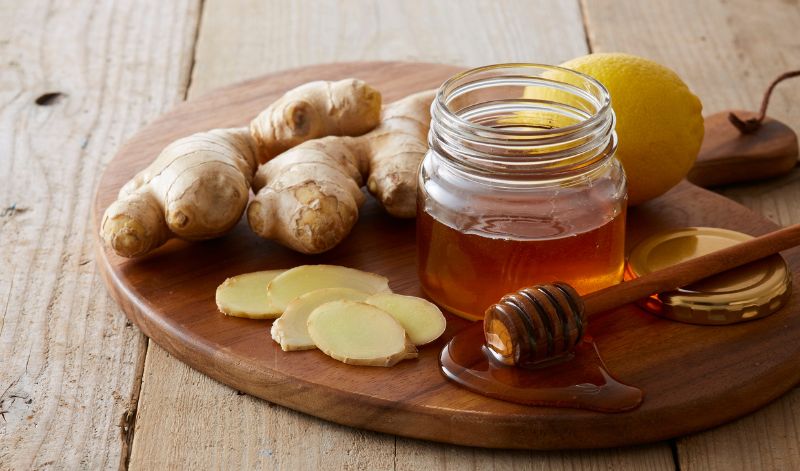
A special helper during the cold season: ginger fermented in honey
Ingredients:
- 100g fresh ginger
- 150g raw honey (ideally from regional production)
Preparation:
- Peel the ginger and cut into thin slices or fine pieces.
- Prepare a clean glass container and place the ginger pieces in it.
- Pour the honey over the ginger so that the pieces are completely covered.
- Seal the container and leave to ferment in a warm, dark place for about 2-3 weeks.
- Shake the container from time to time to distribute the honey evenly.
Both honey and ginger are said to have health-promoting properties, which have even been scientifically proven. For example, ginger has been proven to reduce nausea, relieve pain, reduce inflammation and can strengthen the immune system. Honey also has an anti-inflammatory effect, contains ingredients that protect against free radicals and generally has a positive effect on the immune system. Combined in a ferment, the positive properties of ginger and honey come together - and are further enhanced thanks to the microorganisms produced by the fermentation process.
Ginger fermented in honey not only tastes great on its own, but can also be used in salad dressings, sauces, desserts and fresh drinks such as smoothies or lemonades.
Recipe 2: Fermented garlic in honey
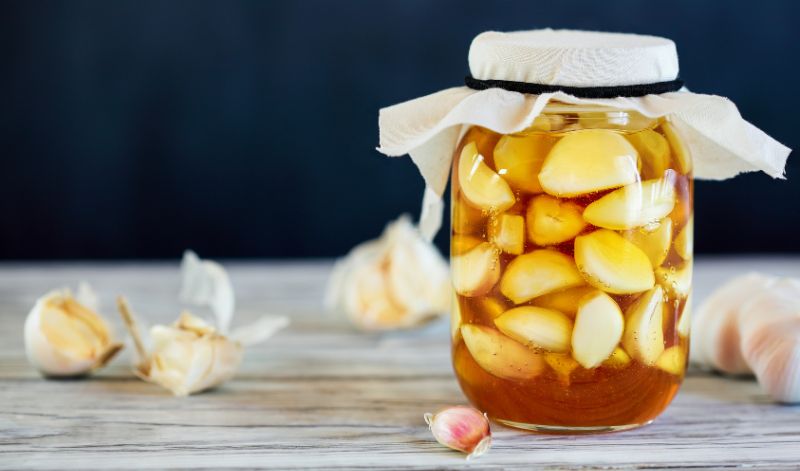
Good for colds and for your general health - garlic fermented in honey
Fermented garlic in honey is not only delicious, it also has health-promoting properties, just like fermented ginger. The ingredients in garlic lower blood pressure and can help prevent thrombosis and strokes. Garlic also has an antibacterial effect and can even help to lower cholesterol levels. Garlic fermented in honey can therefore not only help during the cold season, but also generally improve your well-being and health.
Ingredients:
- 10-15 cloves of garlic
- 200g raw honey
Preparation:
- Peel the garlic cloves and press lightly so that the aromas are better absorbed into the honey.
- Place the garlic in a glass jar and cover with the honey.
- Close the jar and store in a cool, dark place for about 3-4 weeks.
- Stir regularly or shake the jar gently.
You can not only eat the garlic fermented in honey on its own, but also use it to refine savory dishes.
What happens to the honey during fermentation?
When fermenting with honey, the ingredients absorb the unique properties of the honey. The sugar in the honey is partially broken down by the microbes, which leads to a transformation of the aromas and a more intense depth of flavor. At the same time, new enzymes and nutrients are created that enhance the effect of the fermented ingredients. The honey itself remains intact and even shows an increased healing effect due to the additional fermentation processes.
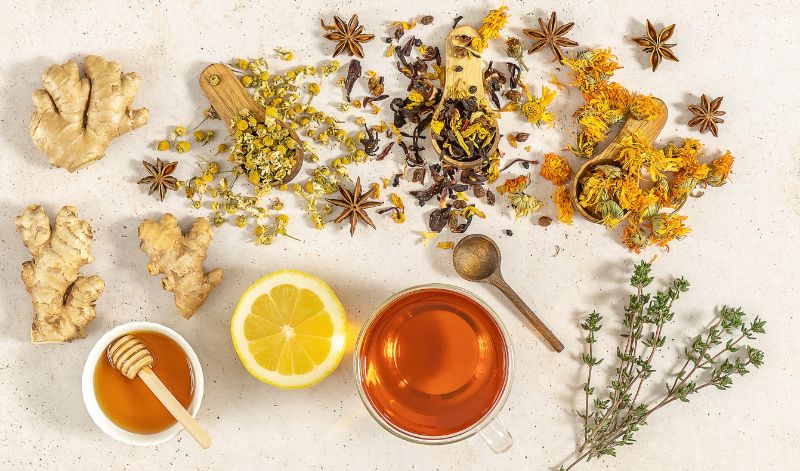
Not only garlic and ginger, but also other ingredients can be fermented in honey.
Health benefits of fermenting in honey
Fermented honey has several health benefits that result from both the fermentation processes and the specific ingredients:
- Aid digestion: fermented foods are rich in probiotic bacteria, which positively influence the microbiome in the gut and aid digestion.
- Strengthening the immune system: Ingredients such as ginger and garlic are known for their antibacterial and antiviral properties and are further strengthened during fermentation.
- Anti-inflammatory: Many fermented ingredients, including garlic and ginger, have an anti-inflammatory effect and can therefore help to alleviate chronic inflammation.
- Antioxidant effect: The fermentation process can boost the antioxidant properties of ingredients such as ginger and cinnamon, which help to fight harmful free radicals and slow down cell ageing.
Fermented honey is therefore not only an exceptional culinary experience, but also a natural support for health. Fermentation intensifies the flavors of the ingredients it contains, makes the nutrients more readily available and enhances the healing properties of the ingredients. With simple ingredients, you can make a valuable addition to a healthy diet or natural helpers for colds at home.
Matching products to the article
About the autor:

#goteam
Some things can only be accomplished as a team. Just like this article here! That's why we mark all jointly created articles as editorial contributions. Cheers!
- Liebt: nerdy food & drinks knowledge
- Favorite drinks: Tasting packages! You can enjoy them together
- Empfehlung des Monats: Try our various food boxes
Recent articles
-
18 JulFrom Whiskey to Delicatessen to Coffee: Why Some Gifts Are Still Remembered Years Later
-
28 JunVintage Lamps as an Interior Design Trend
-
25 JunHausberg Single Malt Whiskey for Collectors and Connoisseurs—the second cask has arrived!
-
21 MarTea or coffee? A world map of hot beverage enjoyment
-
24 FebCoffee drinks from A to Z: The big encyclopedia of all coffee drinks
-
17 FebAll about table salt: Fleur de Sel, sea salt, rock salt & co. - differences, origin & use
-
07 JanDirect juice meets carbon dioxide - why PENG doesn't want to be a soft drink
-
27 AugBetween needle & nose: tattoos, dragons and bananas in a jar
-
03 JulOrange disco on the tongue: the founding story of Satoshi Spirits


