 Quality instead of quantity!
 9,500 independent products
 No mainstream
 No mainstream here




Everything you need to know about the best-before date (BBD)

The most important facts summarized for you:
- The best-before date (BBD) indicates until when a product retains its specific properties
- The best-before date therefore differs from the use-by date, which indicates the period for safe consumption
- The best-before date is mandatory, but the period is determined individually
- The shelf life of food can be positively influenced by correct storage
We all know that moment: you're standing in front of the fridge looking for a snack. Guided by your appetite, you fish out a yoghurt from the back of the drawer - only to discover that the best-before date is already a week ago. Can you still eat the yogurt now? Or should it be thrown away? Time for some answers.
What is the best-before date (BBD)?
Put simply, the best-before date indicates the date until which a product retains its product-specific properties - i.e. taste, consistency and nutritional value. Contrary to what many people believe, the best-before date does not indicate the point at which a food is no longer safe for consumption. It should rather be understood as a kind of quality promise from the manufacturer: "This product can be enjoyed as we manufacturers intended until the date stated". The cookie remains crispy and not soft, the chocolate shiny brown and not slightly grayish, the sauce still tastes intensely of tomato, the juice has the highest possible content of vitamins and minerals.

The best-before date (BBD) indicates how long a product retains its specific properties, such as taste or smell
Because - and this is what the best-before date says - just because the cookie has softened a little does not mean that it is no longer safe to eat. It just might not taste the same as it did when you bought it. Put simply, the best-before date indicates until when the cookie will remain crispy or the sauce will retain its flavor.
The difference between use-by date and best-before date
As already mentioned, the best-before date indicates until when an unopened product retains its specific properties such as taste, smell and nutritional value. However, it does not necessarily mean that the product is inedible or simply no longer safe for consumption after this date.
This contrasts with the use-by date, also known as the expiry date. This date can be found on perishable foods such as meat or fish. The following applies here: you should no longer consume the product after the use-by date, as it may be harmful to your health.
We have established that
- Best before date = the minimum time a product has the desired properties
- Use-by/expiry date = the product is only guaranteed to be safe to eat until this date
How is the best-before date determined?
Apart from a few exceptions such as extremely sugary foods or strong alcoholic drinks, the best-before date is mandatory on all products suitable for consumption. You would therefore think that there would be some strictly regulated specifications for determining the best-before date. Surprisingly, however, this is not the case.
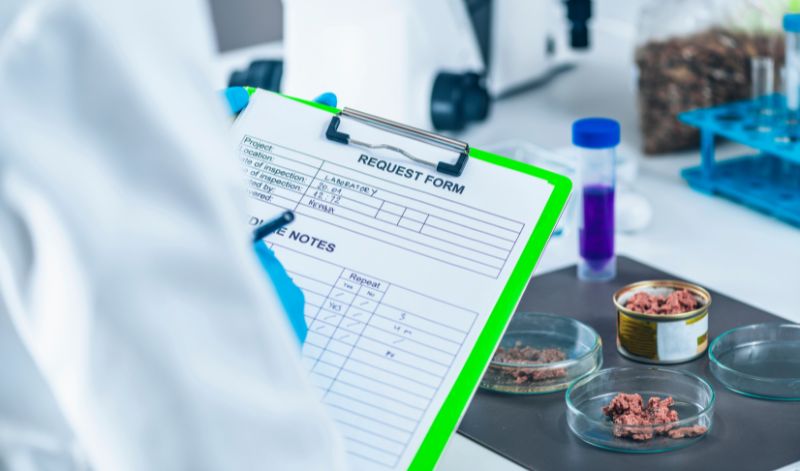
A laboratory test to determine the best-before date of a product is usually very cost-intensive, which is why most manufacturers determine their best-before date in a different way
Manufacturers have several options for determining the best-before date of their product:
- Laboratory analysis: manufacturers can send their products to a laboratory to find out the best before date. There, the products are put under "stress", e.g. exposed to warm temperatures or direct light, and compared with fresh or "gently stored" products (i.e. products frozen or vacuum-packed directly after the manufacturing process). However, as laboratory testing is quite cost-intensive (especially if you have a large product range), very few manufacturers make use of this option.
- Test at your own premises: The shelf life of the product can also be tested at your own premises. Here too, a fresh or vacuum-packed counter product is used to check the change in properties.
- Comparison with existing products: If this takes too long, you can simply use existing products on the market as a guide and transfer the best-before date of similar products to your own.
- BBD calculator: It is also possible to use an online BBD calculator. Here you enter some key product data, such as ingredients and packaging, and a calculated best-before date is spit out.
The options for determining the best-before date already show that the best-before date can only be a guideline or reference point. After all, the shelf life of a food depends not only on the composition of the ingredients, but also on the production method, the type of packaging and, ultimately, the storage conditions at home.
To stick with our cookie example: A cookie with a milk cream filling generally lasts less than a simple oat cookie. And if you leave the packet lying around open on the living room table at home, you shouldn't be surprised that the cookies are no longer crispy after just two days.
What does it really mean when the best-before date has passed?
So let's summarize again: If the best-before date has passed, it simply means that the taste, smell, consistency or composition of the product may no longer correspond to its original state. However, the product is not automatically bad and may still be suitable for consumption.
A good example is dry foods such as rice or pasta. These can often be safely consumed long after the best-before date. Canned foods also usually keep well beyond the specified date.
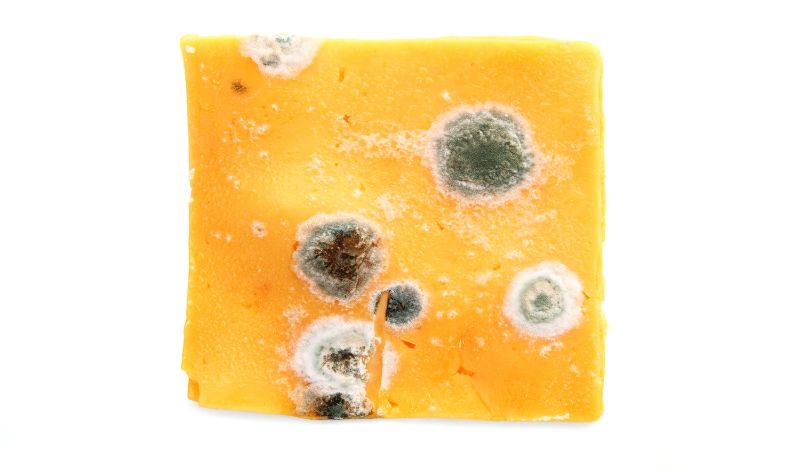
If you want to determine whether a product is still edible, it always makes sense to use your own senses (smell, sight, touch, taste).
Of course, there are exceptions. With fresh products such as meat or fish, you should be more careful and pay attention to smell and appearance. This is why these products are often given a use-by or expiry date, which - unlike the best-before date - indicates until when the product can be safely consumed. In general, however, an expired best-before date does not automatically mean that a product is inedible.
It is therefore always worth using your senses - smelling, looking and tasting - before throwing something away. This not only saves you money, but can also help to reduce food waste.
Tips for extending the shelf life of your food
As we've already established, it's not just the ingredients, packaging and production conditions that affect the shelf life of food - the way we store products at home can also have a big impact. So here are some simple and effective tips on how to extend the life of your products and store food properly.
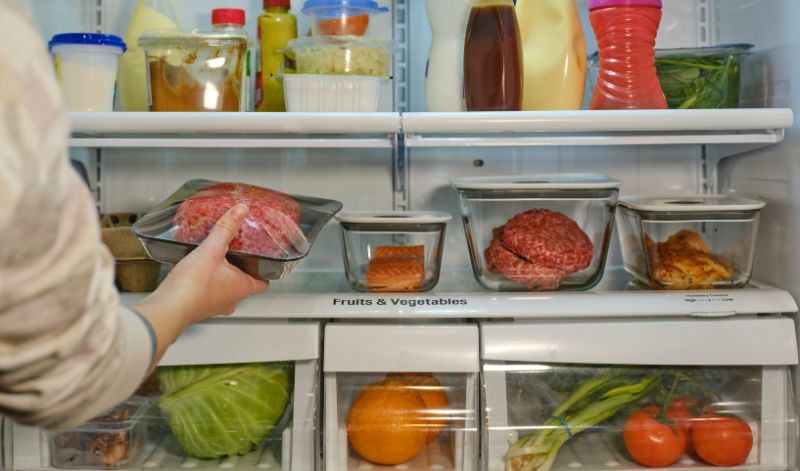
If you store your food correctly, you can significantly extend its shelf life
- Refrigerator organization: Fresh fruit and vegetables belong in the drawers provided for this purpose, while meat and fish should be kept in the coldest section of the refrigerator.
- Packaging: Make sure that you close open packaging tightly or store food in airtight containers. This prevents air and moisture from entering, which slows down spoilage.
- Correct temperature: Keep your fridge and freezer temperatures in the optimum range (fridge at around 4°C, freezer at -18°C). This will keep your food fresh for longer.
- First in, first out (FIFO): Use the older products first and put new purchases at the back of the shelf. This prevents older items from being forgotten and reduces waste.
- Use leftovers creatively: Be creative with leftovers! Many ingredients can be combined to make new meals or frozen for later use.
If you follow these five tips, you will not only avoid a lot of waste, but also save money - a win for you and our planet!
Matching products to the article
About the autor:

Katalog & Marketing Managerin

Für mich geht nichts über das Entdecken kleiner Manufakturen. Ob das der Micro Craft Brauer aus Bayern oder die sächsische Brennerei ist, die es bereits seit Jahrzehnten gibt - hauptsache klein, regional verwurzelt und mit Sinn für's Handwerk!
- Liebt: frische Luft, ihren Hund & Vinyl
- Favorite drinks: wechseln mit so ziemlich jedem Glas...
- Empfehlung des Monats: Alkoholfreier Gin. Der EASIP Fields holt den Frühling ins Glas!
Recent articles
-
21 MarTea or coffee? A world map of hot beverage enjoyment
-
24 FebCoffee drinks from A to Z: The big encyclopedia of all coffee drinks
-
17 FebAll about table salt: Fleur de Sel, sea salt, rock salt & co. - differences, origin & use
-
07 JanDirect juice meets carbon dioxide - why PENG doesn't want to be a soft drink
-
27 AugBetween needle & nose: tattoos, dragons and bananas in a jar
-
03 JulOrange disco on the tongue: the founding story of Satoshi Spirits
-
25 JunFrom retirement project to gourmet institution: the colorful world of the Deheck distillery
-
19 JunHonest voices, real brands: buyers and their choices
-
10 MayClimbing design for children's rooms: Which materials and designs are ideal?


