 Quality instead of quantity!
 9,500 independent products
 No mainstream
 No mainstream here




What is liqueur and how is it made?

The most important facts summarized for you:
- Liqueur always consists of water, alcohol, sugar and fruit, herb or other plant extracts
- According to EU regulations, liqueur must contain at least 100 g of sugar per liter (except for cherry and gentian liqueurs)
- Liqueur has at least 15 % vol. alcohol
- The most popular varieties are Herbal, fruit or fruit juice liqueurs, coffee, nut, egg and cream liqueurs
- Liqueur is usually produced using the maceration process
What is liqueur made from?
Liqueur is generally regarded as the little, less strong brother of brandies and spirits. However, this is only partly true, as liqueurs can also have an alcohol content of a good 40% vol. The real difference between liqueurs and brandies, spirits & co. lies in the addition of sugar. The European Union even stipulates this: 100 g of sugar per liter must be included as a minimum. Exceptions are cherry liqueurs (70 g per liter) and gentian liqueurs (80 g). Incidentally, the minimum alcohol content of liqueurs is 15% by volume.
But what does liqueur actually consist of? Essentially, the alcoholic drink is always made up of three basic ingredients: Alcohol of agricultural origin, mixed with foodstuffs - either naturally produced (i.e. fruit, herbs, juices, spices, milk, eggs, wine, extracts such as essential oils, etc.) or nature-identical (i.e. substances that have the same chemical composition as an apple but have been produced artificially) and sugar.
The art of liqueur production, however, lies in harmonizing the individual flavours of the ingredients in such a way that the end result is a tasty drink. There are different approaches to this.
Buying high-quality liqueurs:

- Manufacturer: CO'PS Drinks
- Style: Coffee liqueur

- Manufacturer: Rose Valley
- Style: Quince liqueur

- Manufacturer: KAMORA
- Style: Hazelnut liqueur

- Manufacturer: Wiegand Manufacture Weimar
- Style: Herbal liqueur

- Manufacturer: Nordik noble distillery
- Style: Cherry liqueur

- Manufacturer: Berlin shenanigans
- Style: Herbal liqueur

- Manufacturer: FREYTAG Liqueurs & Spirits
- Style: Hibiscus liqueur

- Manufacturer: Hambuca
- Style: Sambuca

- Manufacturer: Marder brandies
- Style: Apple liqueur

- Manufacturer: Decibel
- Style: Ginger liqueur
How is liqueur made?
Liqueur can essentially be produced in two different ways: Maceration and distillation. As a rule, however, liqueurs are produced using the maceration process.
Maceration
The ingredients that are to make up the liqueur are soaked in alcohol. This can either be a neutral-tasting alcohol, for example from grain, or another high-proof spirit such as rum or whisky (at Rose Valley, for example, the distiller soaks the nuts for the hazelnut liqueur in hazelnut spirit). Then they wait until the ingredients have released their substances into the alcohol.
As a rule, the macerate is simply left to stand in metal vats or wooden barrels, which can release additional aromas. However, there are also exceptions, such as percolation, in which the alcohol slowly passes through the ingredients. Sugar and water are then added to the resulting liquid in order to regulate the alcohol content to the desired drinking strength. Before the liqueur can be bottled, it is filtered.
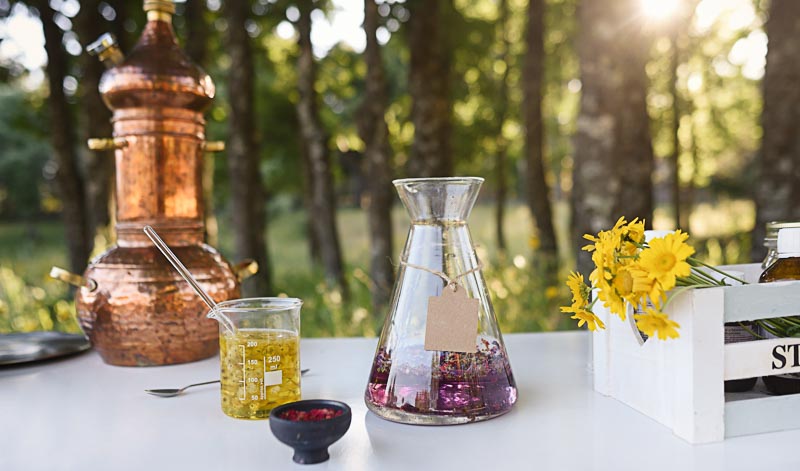
As a rule, the ingredients for liqueurs are macerated in alcohol so that they release their aromas into the liquid.
Distillation
The distillation process is rarely used and mainly produces clear liqueurs. As with brandies, a mash is prepared from the desired ingredients. The liquid is then evaporated in the still. The vapors are drawn off through the so-called spirit tube and fed into a cooler, where they condense again. The condensate, which we usually know as brandy, is then mixed with sugar and also brought to drinking strength with water.
The most popular liqueurs at a glance
Herbal liqueur
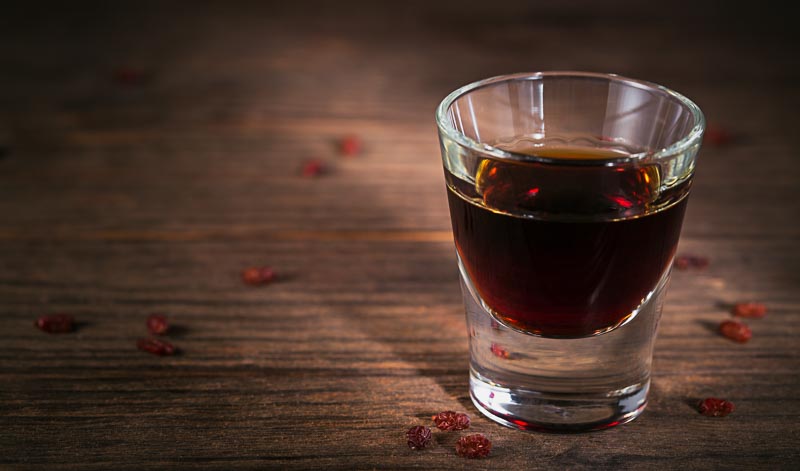
Herbal liqueurs are considered the original form of liqueurs.
- "Original form" of liqueurs
- were originally produced as a remedy, which is why they are still considered to have digestive properties today, for example
- used to taste very bitter, today (due to the addition of sugar) they have a rather mild and sweet flavor
- Difference between herbal liqueur vs. bitters: herbal liqueurs tend to be sweet in taste, bitters (also known as bitters or semi-bitter) tend to be tart and bitter
- usually made from a mixture of several herbs
You can find our range of herbal liqueurs here.
Fruit & fruit juice liqueur
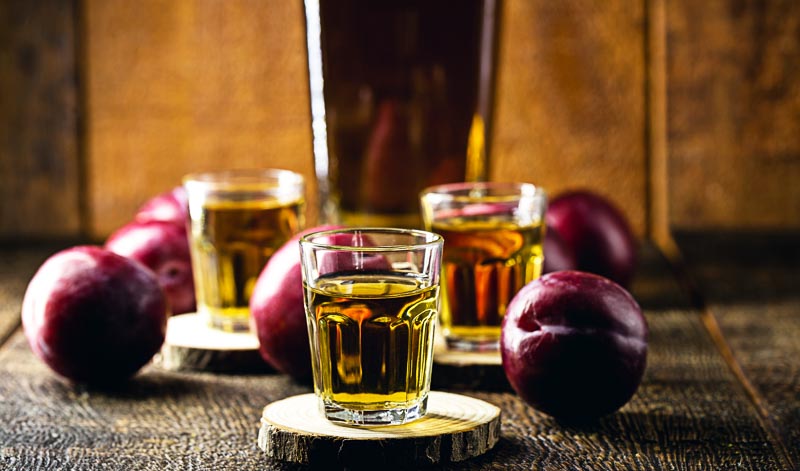
Fruit liqueurs can be made from either whole fruit or fruit juice.
- Difference: Whole fruits are macerated in fruit liqueurs, while only the juice is added to the alcohol in fruit juice liqueurs
- Fruit juice liqueurs contain at least 20 percent juice
- have been increasingly consumed for around 30 years
- Great variety of flavors
You can find our fruit liqueurs here
Nut liqueur
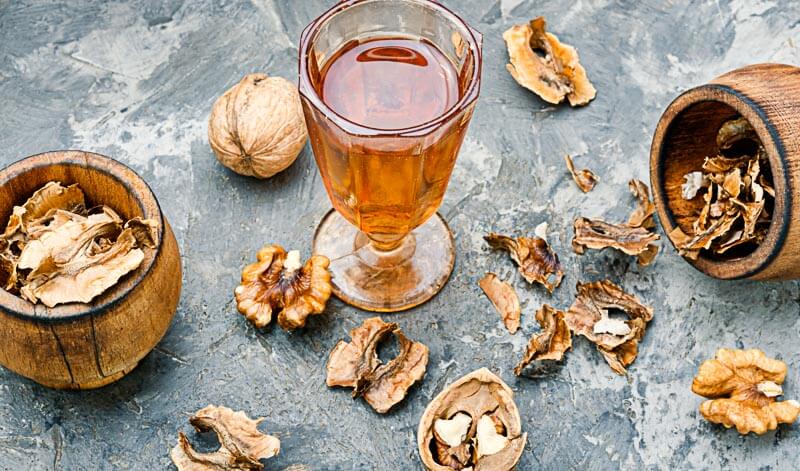
The most popular nut liqueurs are hazelnut and walnut liqueurs.
- is produced using the maceration process
- common are hazelnut liqueur and walnut liqueur, but also pistachio, peanut or coconut liqueur
You can find a selection of nut liqueurs here !
Egg liqueur
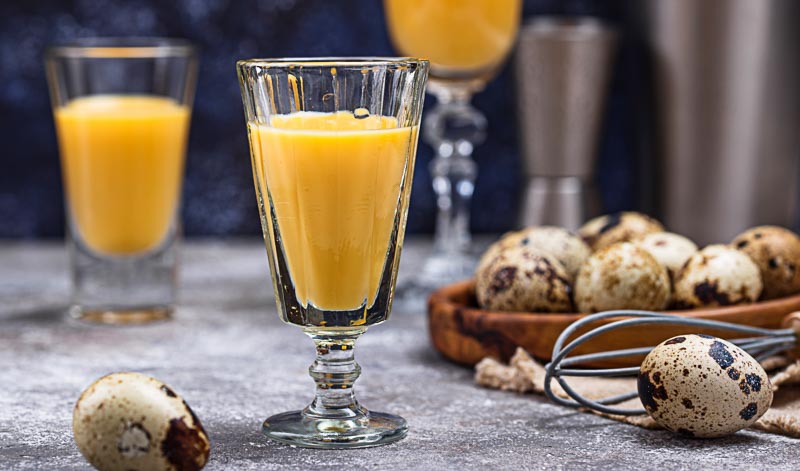
The forerunner of egg liqueur was made from avocados.
- Creamy-sweet taste
- consists mainly of egg yolk, sugar & alcohol
- is often prepared at home with milk, cream or condensed milk
- The original form of eggnog was made from avocados
Order your favorite egg liqueur now!
Cream liqueur (also known as cream liqueur)
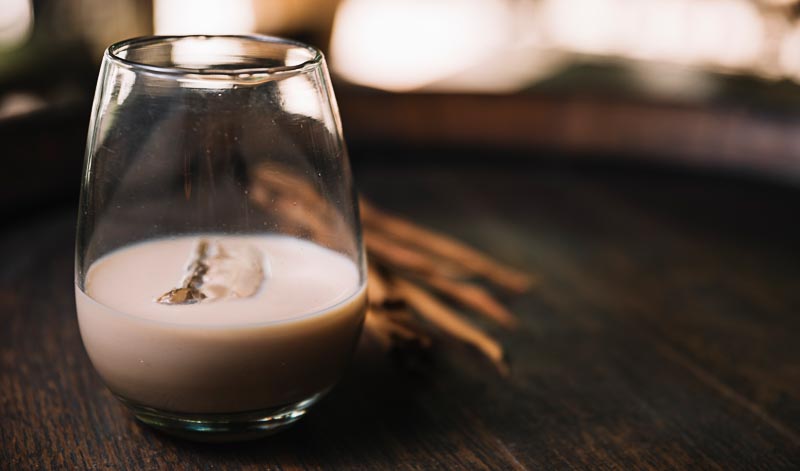
Cream liqueurs must not be stored in the freezer!
- similar to egg liqueur creamy-sweet taste
- Main ingredient: cream or milk, usually in combination with chocolate or similar
- often based on whisky, cognac or vodka
- must not be stored in the freezer, only in the fridge
Coffee liqueur
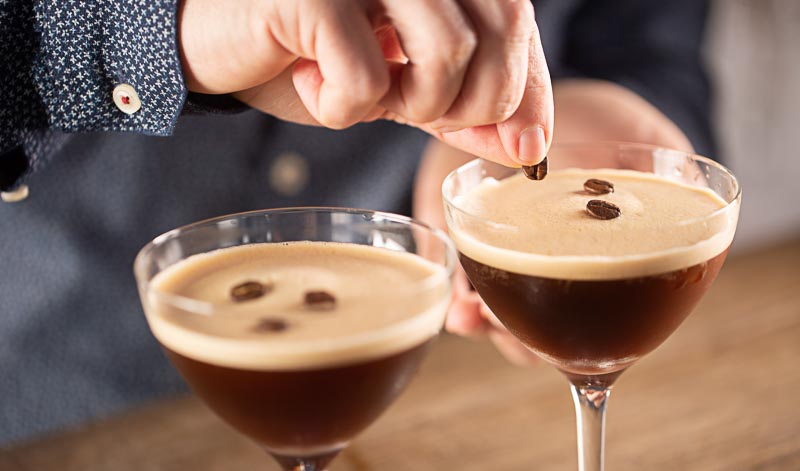
Coffee liqueurs are often used in cocktails such as the Espresso Martini.
- goes back to the Mexican Kahlua
- usually has a sweet coffee flavor, but tart variations are also possible
- is usually produced using the maceration process
- is often used in cocktail recipes
Discover now: Coffee liqueur
Bitter liqueur

Bitter liqueurs are also often used in cocktails, as in this Negroni here. But bitter liqueurs are also popular as aperitifs.
- are mostly made from plant extracts
- taste tart, but still slightly sweet
- make a good aperitif due to the bitter aromas they contain (appetizing)
- can be found in classic cocktails such as Negroni, Aperol or Old Fashioned
You can order bitter liqueurs here! To the range
How do you drink liqueur?
Liqueurs are traditionally drunk neat. Bitter and herbal liqueurs are particularly popular as an aperitif, i.e. an appetizer before a rich meal, or as a digestif after a meal.
However, you can also use liqueurs as ingredients in cocktails and for cooking and baking - or enjoy them with a filler, such as tonic water, as a long drink. Freytag's hibiscus blossom liqueur, for example, tastes excellent in this way. There are no limits to your creativity when it comes to combinations!
Depending on your taste and preferences, you can choose from creamy-sweet to sour or spicy-hot flavors for a wide variety of tastes. Taste your way through the colorful world of liqueurs and discover the variety of flavors of high-quality craft spirits! Buy liqueurs online now
Matching products to the article
About the autor:

Katalog & Marketing Managerin

Für mich geht nichts über das Entdecken kleiner Manufakturen. Ob das der Micro Craft Brauer aus Bayern oder die sächsische Brennerei ist, die es bereits seit Jahrzehnten gibt - hauptsache klein, regional verwurzelt und mit Sinn für's Handwerk!
- Liebt: frische Luft, ihren Hund & Vinyl
- Favorite drinks: wechseln mit so ziemlich jedem Glas...
- Empfehlung des Monats: Alkoholfreier Gin. Der EASIP Fields holt den Frühling ins Glas!
Recent articles
-
28 JunVintage Lamps as an Interior Design Trend
-
25 JunHausberg Single Malt Whiskey for Collectors and Connoisseurs—the second cask has arrived!
-
21 MarTea or coffee? A world map of hot beverage enjoyment
-
24 FebCoffee drinks from A to Z: The big encyclopedia of all coffee drinks
-
17 FebAll about table salt: Fleur de Sel, sea salt, rock salt & co. - differences, origin & use
-
07 JanDirect juice meets carbon dioxide - why PENG doesn't want to be a soft drink
-
27 AugBetween needle & nose: tattoos, dragons and bananas in a jar
-
03 JulOrange disco on the tongue: the founding story of Satoshi Spirits
-
25 JunFrom retirement project to gourmet institution: the colorful world of the Deheck distillery


