 Quality instead of quantity!
 9,500 independent products
 No mainstream
 No mainstream here




Pitaya: The secret of the exotic dragon fruit

The most important facts summarized for you:
- Pitaya, also known as dragon fruit, belongs to the cactus family.
- It is rich in vitamin C, fiber and antioxidants.
- There are 3 different varieties of dragon fruit.
- The first harvest can only take place after 20 years.
- It supports the immune system, aids digestion and contributes to healthy skin.
Exotic, bright and full of healthy nutrients - the pitaya, better known as dragon fruit, is not only an eye-catcher, but also a real superfood. The exotic pitaya not only impresses with its refreshing taste, but also with its numerous health benefits. But where does it actually come from, what exactly does it taste like and how can you use it in the kitchen? We take you on a journey into the world of dragon fruit and show you why it is a real superfood.
What exactly is dragon fruit and what does it taste like?
Dragon fruit, also known as pitaya, is the exotic fruit of various cactus species, in particular the genus Hylocereus. It is easily recognizable by its bright pink or yellow skin with scale-like outgrowths. Inside is a juicy, white or red flesh with small black seeds. Due to its mildly sweet taste and numerous health benefits, it is very popular all over the world.
They are available in 3 different varieties:
- Pink skin with red flesh
- Pink skin with white flesh
- Yellow skin with white flesh - considered the sweetest of the 3 varieties

The pitaya, also known as dragon fruit, comes in three different varieties.
Where does the dragon fruit come from?
The dragon fruit originally comes from Central America, particularly Mexico and Central America. Today, however, it is cultivated in many tropical and subtropical regions of the world, including Vietnam, Thailand, Israel and the Philippines.
The plants thrive best in warm climates and require little water, making them a sustainable crop.
Incidentally, it's not just the fruits of the Hylocereus cactus that are a real eye-catcher. The flowers, which open at night in particular and serve as a rich source of food for bats and moths, are also an absolute feast for the eyes. Among the cactus species, the flowers of the Hylocereus are among the largest of the plant species.
Health benefits
Dragon fruit is not only delicious, but also extremely healthy thanks to its rich ingredients:
- Rich in antioxidants: these help to fight free radicals in the body and protect cells from damage. Antioxidants are important because they can slow down the ageing process and reduce the risk of chronic diseases.
- Vitamins: With their high vitamin C content, they can support the immune system and promote collagen production for healthy skin. Vitamin C can also help heal wounds and strengthen connective tissue. The dragon fruit also contains vitamins A and B.
- High in fiber: Can aid digestion and help prolong the feeling of satiety.
- Low in calories: Ideal for a calorie-conscious diet as it is sweet and filling without providing many calories.
- Promotes heart health: Contains omega-3 and omega-6 fatty acids, which can help regulate cholesterol levels and strengthen the cardiovascular system.
- Minerals: Also contains calcium, potassium and magnesium, which can support heart, muscle and bone health.
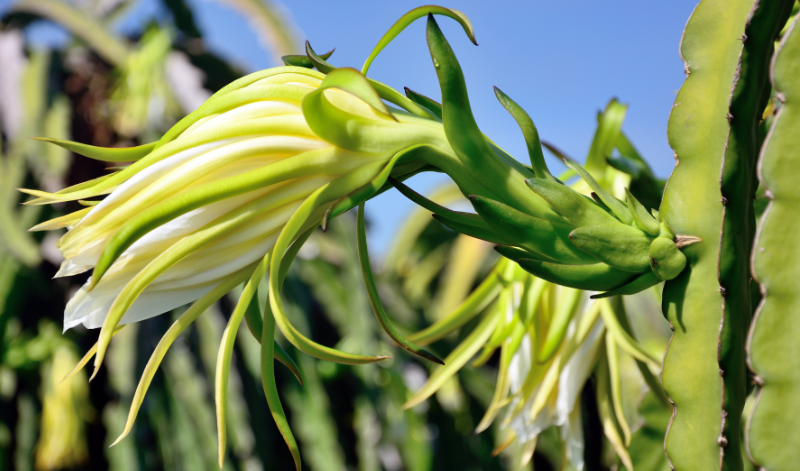
The flower of the dragon fruit cactus is one of the largest cactus flowers of all
Culinary use
Dragon fruit can be enjoyed in many different ways:
- In smoothies: adds an exotic touch and beautiful color. Combines well with other tropical fruits such as mango, pineapple and banana.
- In fruit salads: Combines with other tropical fruits for a refreshing snack or light meal. Dragon fruit can also be mixed with yoghurt or quark to create a healthy and tasty breakfast treat.
- As a dessert: In sorbets, yogurt or even in cakes and tarts. Dragon fruit can also be used as an ingredient in exotic cocktails.
- In savory dishes: In salsas or as a garnish for fish dishes for a sweet and refreshing touch.
How do you eat dragon fruit?
Preparing dragon fruit is simple:
- Cut the fruit open lengthwise and scoop out the flesh
- Or peel it out and cut it into cubes. The flesh can be eaten raw or used in various recipes.
- Enjoy the fruit on its own or add it to smoothies, salads or desserts.
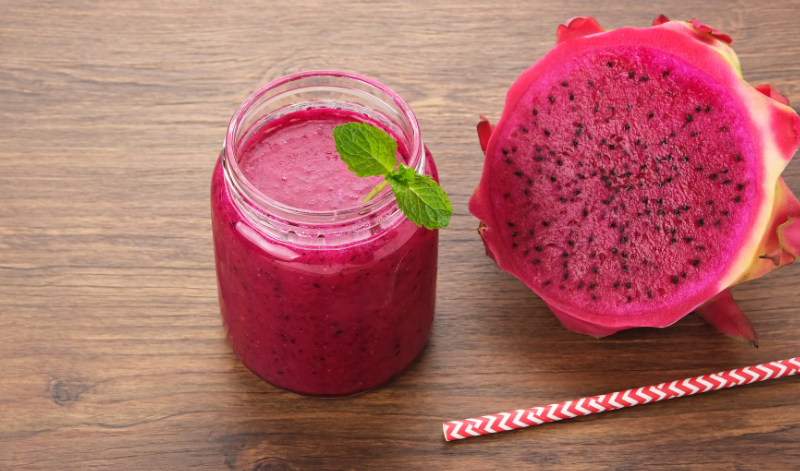
Pitayas can be used in smoothies, desserts, salads and even as a cocktail garnish.
The dragon fruit is therefore a true superfruit that not only looks and tastes exotic, but is also really healthy. Whether as a snack, in your drink or as an exotic ingredient in a dessert - dragon fruit is versatile and should be a staple in every kitchen. Its high content of vitamins, minerals and antioxidants makes it a valuable addition to a balanced diet.
Try this fascinating superfruit and discover for yourself how it can enrich your meals!
Matching products to the article
About the autor:

#goteam
Some things can only be accomplished as a team. Just like this article here! That's why we mark all jointly created articles as editorial contributions. Cheers!
- Liebt: nerdy food & drinks knowledge
- Favorite drinks: Tasting packages! You can enjoy them together
- Empfehlung des Monats: Try our various food boxes
Recent articles
-
28 JunVintage Lamps as an Interior Design Trend
-
25 JunHausberg Single Malt Whiskey for Collectors and Connoisseurs—the second cask has arrived!
-
21 MarTea or coffee? A world map of hot beverage enjoyment
-
24 FebCoffee drinks from A to Z: The big encyclopedia of all coffee drinks
-
17 FebAll about table salt: Fleur de Sel, sea salt, rock salt & co. - differences, origin & use
-
07 JanDirect juice meets carbon dioxide - why PENG doesn't want to be a soft drink
-
27 AugBetween needle & nose: tattoos, dragons and bananas in a jar
-
03 JulOrange disco on the tongue: the founding story of Satoshi Spirits
-
25 JunFrom retirement project to gourmet institution: the colorful world of the Deheck distillery


