 Quality instead of quantity!
 9,500 independent products
 No mainstream
 No mainstream here




Whisky varieties

The most important facts summarized for you:
- Different countries of origin play a role in whisky varieties
- The type of production and the composition of the ingredients also distinguish different varieties from each other
- Mild and smooth whiskies are particularly suitable for cocktails
- High-quality whiskies are ideal for drinking neat
What types of whisky are there?
The selection of whisky varieties is huge: single malt, single cask, bourbon, blended, peated - to name just a few.
Not to forget that the countries of origin also play an enormous role.
Whether a whisky comes from Scotland, Japan, Germany or the USA or whether you have an Irish whisky in your glass - each has its own unique character.
So where to start? We'll enlighten you.
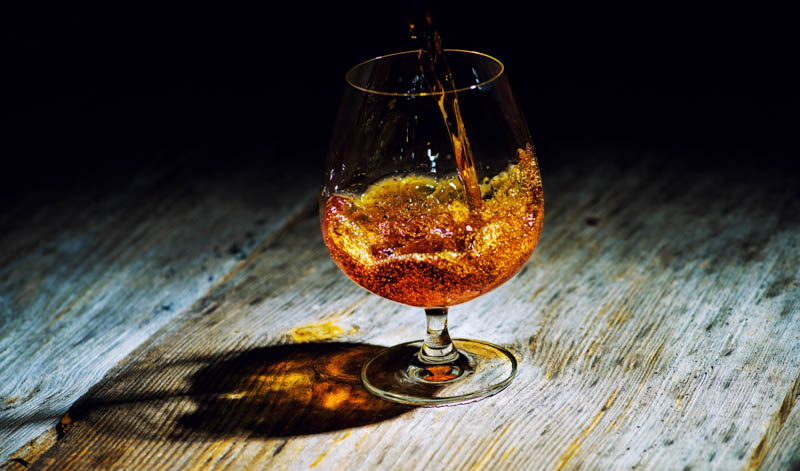
We have compiled the characteristics of ten different types of whisky for you
Here is an overview of 10 whisky varieties:
Single malt whisky
The single malt is a big and much imitated star.
The Scottish production process for this king among whiskies is standard worldwide.
The "single" means that this is one of the types of whisky produced by a single distillery and from a single grain.
It is made from malted barley ("malt"). Single malts are distilled in copper pot stills.
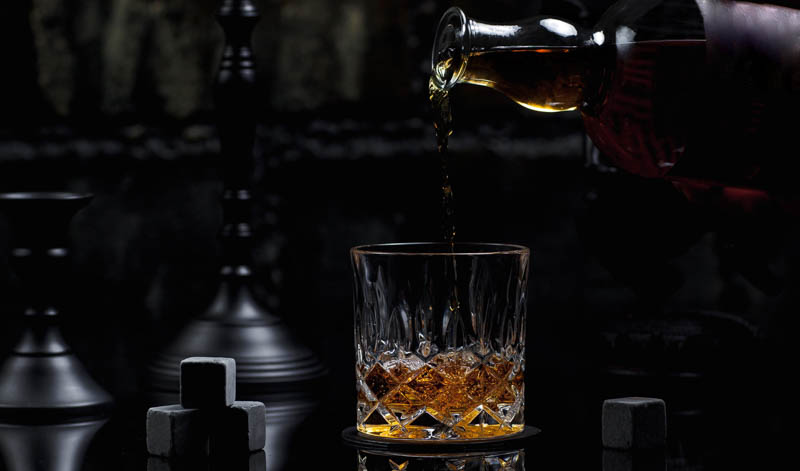
Single malt whisky is made from malted barley and comes from a distillery
After distillation, the single malt whisky matures for at least three years in oak barrels.
This is where the character really takes shape and is influenced by the cask used.
If you want to find out more about the production and characteristics of single malt, you should take a look here: What is single malt whisky
Single cask
While a single malt comes from a single distillery, different bottlings from different casks are blended together.
This step is omitted for single cask.
This is a whisky that comes from a single cask.
Single refers only to the cask, not the grain.
It can therefore also be produced with other types of whisky and come from any country.
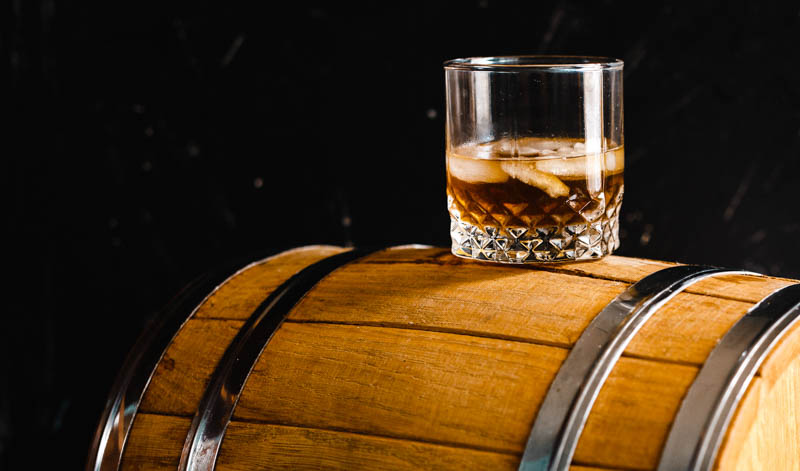
Single cask whisky always comes from a single cask
The decisive factor is: The cask must contain really good quality, as there is no need to adjust the taste by blending.
The good stuff is also limited.
Single cask whiskies are expensive collector's items.
Blended malt whisky
The "malt" is still in there - a reference to 100 percent malted barley.
The "blended" stands for the blending of cask contents from different distilleries.
The origin can be international.

With blended whisky, different cask bottlings are blended together
Is blended malt the same as blended Scotch whisky?
Like blended malt, blended Scotch is made from whiskies from different distilleries.
But the starting material for blended Scotch is different: Not only malted barley as in single malt, but also grain whisky, which is made from other types of grain such as rye, wheat and corn.
This produces mild, velvety whiskies.
Grain whiskey
"Grain" simply means grain.
However, this does not mean that this type of whisky tastes like a good old German grain.
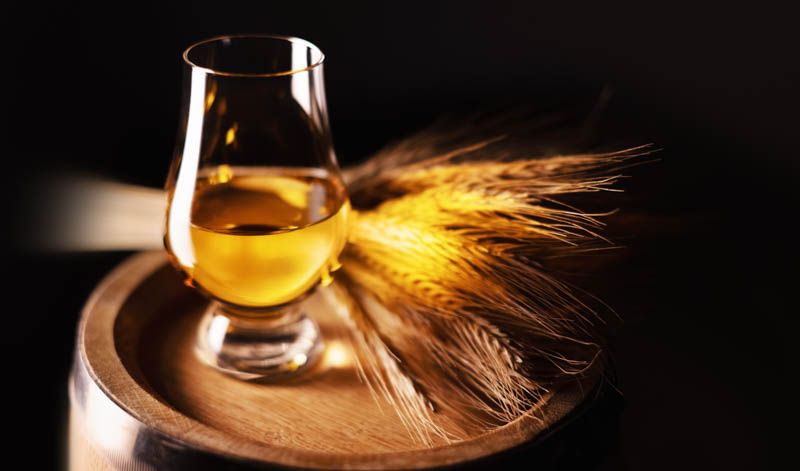
Grain whiskey contains different types of grain in different proportions
Grain whiskey contains wheat, rye, barley and corn in varying proportions.
This whiskey is easy to drink and has a slightly sweet fruitiness.
It is therefore ideal for those discovering whiskey varieties for the first time.
If the grain comes from a single barrel, it is called single grain whiskey - also a collector's item.
Irish whiskey
The production method of Irish single malt whiskey does not differ greatly from Scottish single malt varieties.
The Irish do not require barrel maturation in oak - but most distilleries choose to do so.
In Ireland, whiskey is distilled three times in pot stills - not twice as in Scotland.
This results in a product that is one of the lighter, more drinkable types of whiskey - easy to drink.
Nevertheless, good Irish whiskeys are never flat, but complex with fruity aromas and warm barrel notes.
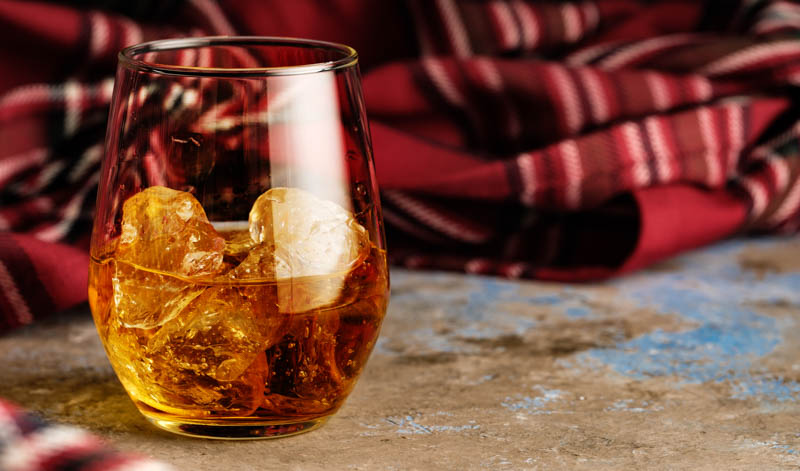
Irish whiskey also differs from Scotch whiskey in the way it is produced
One whiskey variety that is unique to Ireland is single pot still whiskey.
For this, malted and unmalted barley is processed.
Originally, this was intended to save taxes.
Today, this process produces super-soft and pure whiskeys.
Bourbon whiskey
Bourbon is a completely different type of whiskey.
Slightly catchy, tending towards sweetness, with a more defined aroma.
An ideal entry-level whiskey.
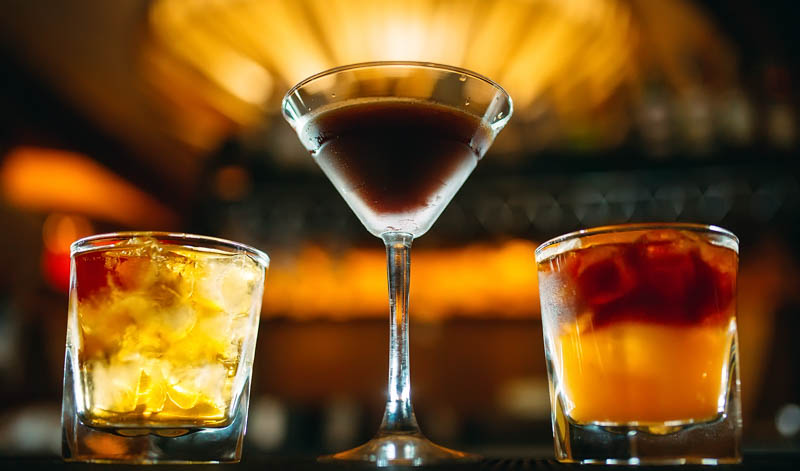
American bourbon whisky is the ideal entry-level whisky and is perfect for making cocktails
Bourbon originates from the USA.
The strongholds here are the states of Kentucky and Tennessee.
Bourbon whiskey always consists of at least 51 percent corn.
Rye, wheat and barley are then added.
The production differs from the whisk(e)y varieties of Scotland and Ireland.
The vast majority of bourbon is distilled in column stills - three times.
There is no minimum maturation period as with the European whisky varieties.
However, straight bourbon must be matured for a minimum of two years in fresh American white oak barrels.
The barrels are distilled at defined strengths - this enhances the barrel aromas and color intensity.
There are also different varieties of bourbon whiskey
Among the American whiskey varieties, there is also bottled-in-bond bourbon whiskey.
This has strict requirements: from one distillery, from one season, aged in barrels for at least four years, no chill filtration.
And finally, the Americans have also created whiskey varieties for collectors: The Single Barrel Bourbon.
In other words, single barrel bottlings with a strict limitation.
Tennessee whiskey
Tennessee is actually one of the bourbon whiskey varieties.
But firstly, it is a designation of origin (like "Scotch").
And secondly, there is a unique production step.
The composition and distillation are the same as for bourbon.
However, the finished distillate is filtered through several thick layers of maple charcoal.
This makes Tennessee one of the mildest types of whiskey.
Strong vanilla aromas, caramel, maple syrup and spices such as allspice and pepper are typical of this specialty.
Corn whiskey
We are still in the USA and not far removed from bourbon.
Corn whiskey has a corn content of at least 80 percent.
Whiskey varieties that are distilled entirely from corn are called straight corn whiskey.
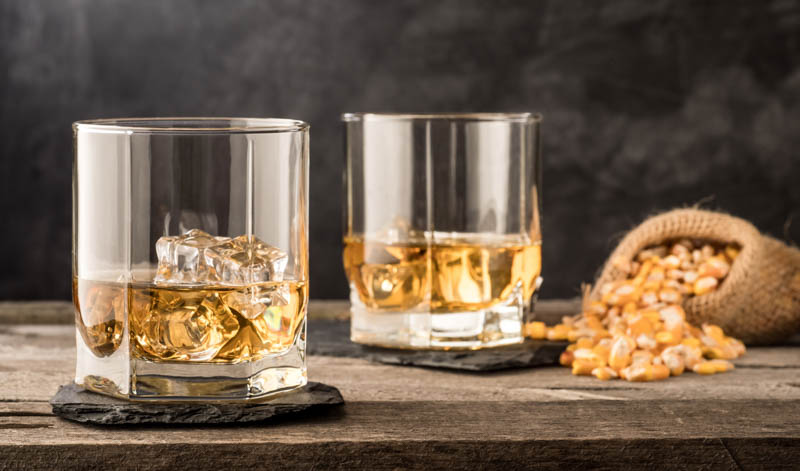
Corn whiskey is made from corn
No barrel maturation is required for corn-based distillates.
Corn whiskeys are very pleasant spirits to drink.
They feel sweet, creamy and intense in the mouth and smell of popcorn, banana, cinnamon, vanilla and nuts.
The golden color of corn whiskey is also striking.
Rye whiskey
We have not yet reached the end of the American whiskey varieties.
Rye has been on the wane for a long time, but is now enjoying a renaissance.
This is what makes rye whiskey so special: The grain must contain at least 51 percent rye.
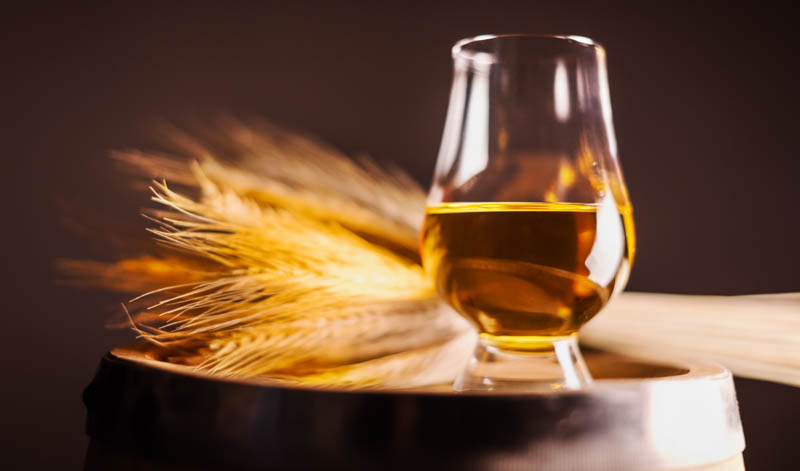
Rye whiskey is made from rye
It is stored for at least two years in freshly charred oak barrels.
Rye is very spicy, slightly bitter and dry in taste.
Aromas such as cloves, ginger, cinnamon and orange peel can often be detected.
Rye is one of the types of whiskey that can be enjoyed neat.
But it also works well as a cocktail ingredient- for example in a Manhattan.
Cask strength whiskey
If you need a really strong sip, opt for a cask strength.
This is the strongest of all whisky varieties. In other words, the strongest in alcohol.
Normally, all types of whisky are brought to 40 to 46 percent drinking strength with the brewery's spring water.
drinking strength.
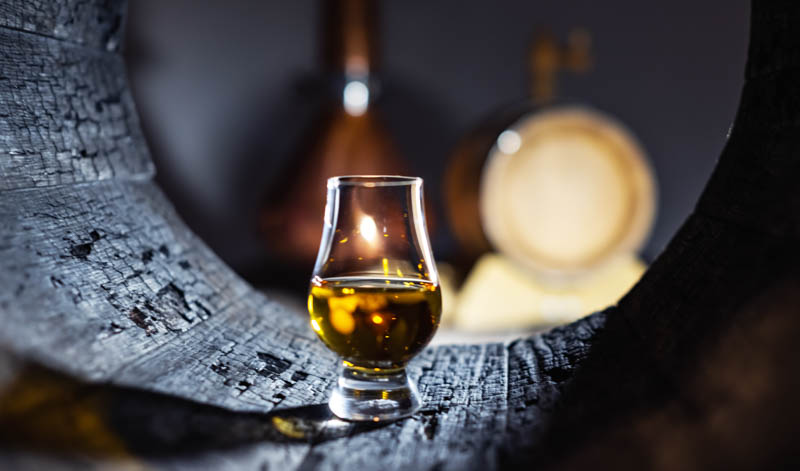
Cask strength whisky is not diluted with water, but comes straight from the cask into the bottle
This is not the case with cask strength.
It comes from the cask into the bottle as it is.
As volume percentages are lost during maturation (the angels' share, as the Scots say), there is no fixed value for these types of whisky.
A cask strength is between 50 and 68 percent by volume.
Please only try it sitting down!
Cask ageing & its effect on the aromas
There's one thing you can't accuse whisky makers of: Unimaginativeness.
When you see what is available, you realize that there has always been a lot of experimentation in this area.
With the casks, for example.
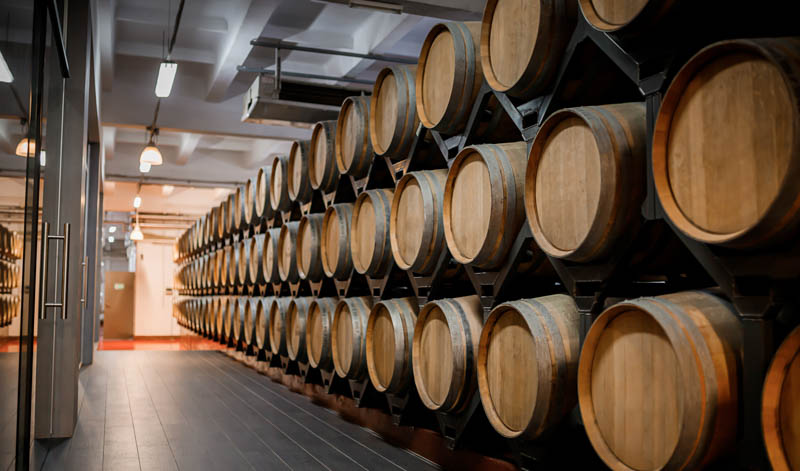
Which cask the whisky is stored in and for how long has an enormous influence on its taste
Many types of whisky are matured in used casks. This shapes the taste:
- Ex-bourbon casks: fine aromas of bright fruits, citrus and lots of vanilla
- Ex-sherry barrels: dark color, complex aromas (brown sugar, dried fruit, tobacco, cinnamon)
- Ex-port wine barrels: dark, red color, full-bodied dried fruit aromas
- Ex-wine barrels: multi-faceted aromas of fruit, berries and fine spices
- Ex-rum casks: exotic fruit flavors of mango, melon, papaya, banana, pineapple
Whisky varieties FAQ
The whisky regions of Scotland
It really is true: talking about "whisky" is about as precise as talking about "Europeans".
The whisky stronghold of Scotland alone produces distinctly different types of whisky in its regions.
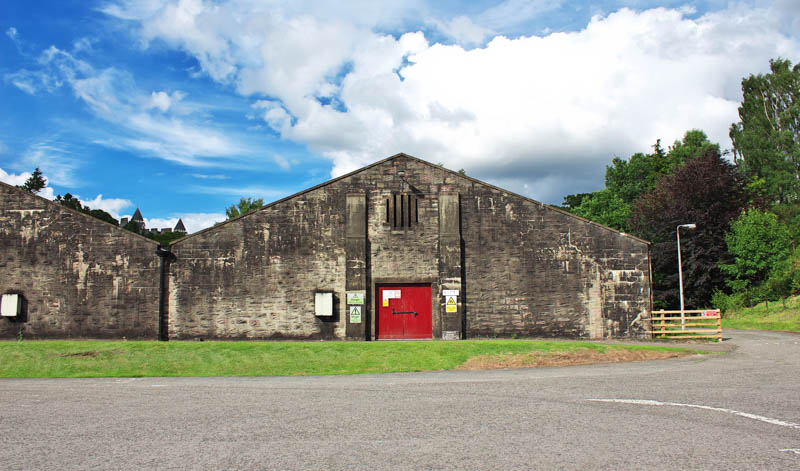
Scotland has five distinctive whisky regions
The whisky regions of Scotland at a glance:
- Lowlands: dry, mild profile; good introduction to the single malt world
- Highlands: spicy, complex, heavy, prestigious
- Speyside: perhaps the most famous whisky region in the world, with elegant, multi-layered, delicate whiskies of the highest balance
- Campbeltown: heavy and oily
- Islay: unique combination of peat, smoke, sea air with floral, sweet heather notes
Whisky or whiskey - what's the difference?
This can sometimes lead to confusion: Some bottles say whisky, while others use the spelling whiskey.
Is this just a play on words?
In fact, the spelling already gives an indication of the origin of the whisk(e)y and therefore also of its character.
Generally speaking, it can be said: Only whiskey from Ireland and American bourbon are spelled with an e.
Scottish, Canadian, German or Japanese whisky are spelled without the e.
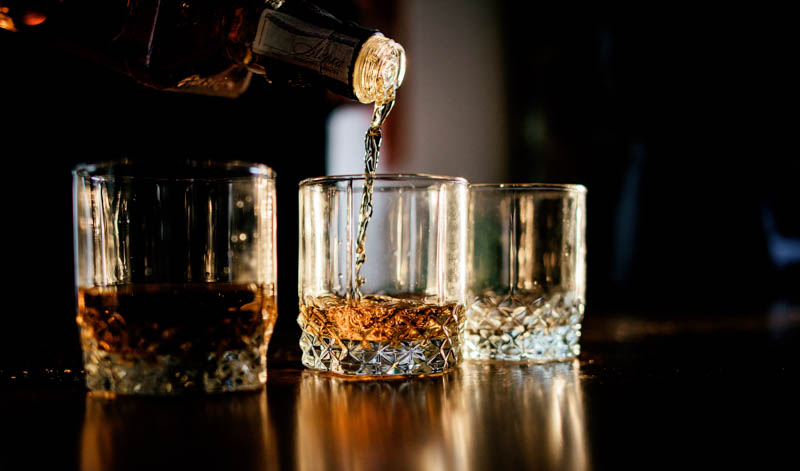
The difference between whiskey and whisky is explained by their origin and production methods
The difference lies in the production: Irish whiskeys use malted and unmalted barley, which is not kilned, as is the case with Scottish single malts, for example.
Whiskey is also triple distilled, which results in a higher alcohol content than whisky.
American bourbon whiskey also has special production specifications that distinguish it from whisky and Irish whiskey.
Which whisky for cocktails?
You don't pour a single malt into a cocktail. It is best drunk neat.
Bourbon is one of the types of whiskey that looks good on ice or in a cocktail.
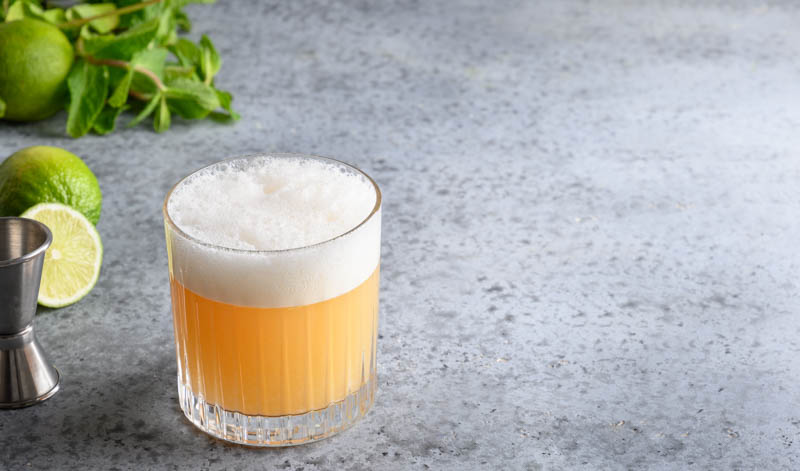
Whisky sour is a popular sweet and sour whisky cocktail
The Old Fashioned is probably the best-known whisky cocktail.
But the Whisky Sour, the original cocktail of all sours from the gold rush era, also impresses with its sweet and sour aroma.
Where can I buy good whisky?
You can get really good whisky not only in well-stocked liquor stores or directly from the producer. In our online store you will find a huge selection of the highest quality whiskies from small-scale production. Take a look! --> To the whisky assortment
Matching products to the article
About the autor:

#goteam
Some things can only be accomplished as a team. Just like this article here! That's why we mark all jointly created articles as editorial contributions. Cheers!
- Liebt: nerdy food & drinks knowledge
- Favorite drinks: Tasting packages! You can enjoy them together
- Empfehlung des Monats: Try our various food boxes
Recent articles
-
01 JulRare Teas as Collectibles: What Connoisseurs Appreciate
-
28 JunVintage Lamps as an Interior Design Trend
-
25 JunHausberg Single Malt Whiskey for Collectors and Connoisseurs—the second cask has arrived!
-
21 MarTea or coffee? A world map of hot beverage enjoyment
-
24 FebCoffee drinks from A to Z: The big encyclopedia of all coffee drinks
-
17 FebAll about table salt: Fleur de Sel, sea salt, rock salt & co. - differences, origin & use
-
07 JanDirect juice meets carbon dioxide - why PENG doesn't want to be a soft drink
-
27 AugBetween needle & nose: tattoos, dragons and bananas in a jar
-
03 JulOrange disco on the tongue: the founding story of Satoshi Spirits


