 Quality instead of quantity!
 9,500 independent products
 No mainstream
 No mainstream here




The art of barrel ageing: how different types of wood & barrel sizes influence the taste of spirits

The most important facts summarized for you
- Barrel ageing has a significant influence on the taste and aroma of spirits.
- Different types of wood and barrel sizes play an important role.
- The choice of barrel can greatly change the character of the spirit.
- The storage and environment also have a major influence.
Buying barrel-aged spirits

- Style: Single malt whisky
- Barrel type (general): Holzfass

- Style: Bourbon
- Barrel type (general): Oak barrel

- Style: Single malt whisky

- Style: Single Cask Whisky
- Barrel type (general): Oak barrel

- Style: Single Cask Whisky
- Barrel type (general): Oak barrel

- Style: Single malt whisky
- Barrel type (general): Oak barrel

- Style: Single malt whisky
- Barrel type (general): Oak barrel

- Style: Whisky
- Barrel type (general): Whisky barrel

- Style: Rum liqueur

- Style: Whisky liqueur

- Style: Golden Rum
- Barrel type (general): Oak barrel

- Style: Spirits tasting set

- Style: Spirits tasting set

- Style: Rum liqueur

- Style: Malt whisky
The art of barrel ageing is a fascinating process that significantly influences the taste and aroma of spirits. Different types of wood and barrel sizes play an important role in this process. Here you can find out all about the art of barrel ageing and how it changes the character of your favorite spirits.
What is barrel ageing?
Barrel ageing is the process of storing spirits in wooden barrels to enhance their flavor and aroma. During maturation, the spirit interacts with the wood, resulting in a variety of chemical reactions. These reactions give the spirit its unique aromas and flavors.
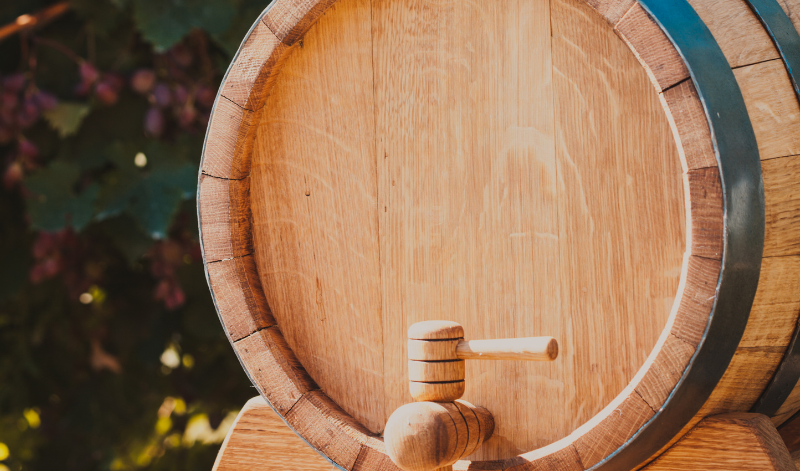
When spirits are stored in barrels, their taste & aroma is automatically altered
The role of wood types
The choice of wood type is crucial to the flavor of the spirit. Here are some of the most common types of wood used:
1. American white oak
American white oak (Quercus alba) is one of the most commonly used wood species. It grows quickly and has a dense wood structure. Barrels made from American white oak give the spirit aromas of vanilla, caramel and coconut.
2 European oak
European oak (Quercus robur) grows more slowly than American white oak and has a more open wood structure. It gives the spirit complex aromas of spices, dried fruit and nuts.
3. japanese mizunara oak
Mizunara oak (Quercus mongolica) is a rare and expensive wood species used in Japan. It gives the spirit unique aromas of sandalwood, coconut and oriental spices.
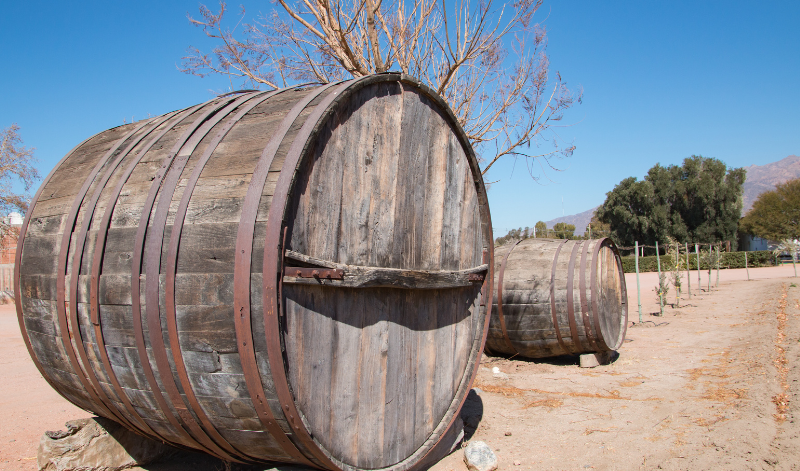
The larger the cask used, the slower a spirit absorbs the flavor of the cask
The importance of barrel sizes
The size of the barrel also plays an important role in barrel ageing. Smaller barrels have a larger surface area in relation to the volume of the spirit, which leads to faster maturation. Here are some common barrel sizes:
1. barrique barrels
Barrique barrels have a volume of around 225 liters and are often used for maturing wine and whisky. They offer a good balance between surface area and volume and allow for even maturation.
2. hogshead barrels
Hogshead casks have a volume of around 300 liters and are often used for maturing whisky. They offer slower maturation and give the spirit more complex aromas.
3. butt casks
Butt casks have a volume of around 500 liters and are often used for maturing sherry and whisky. They offer very slow maturation and give the spirit deep and rich aromas.
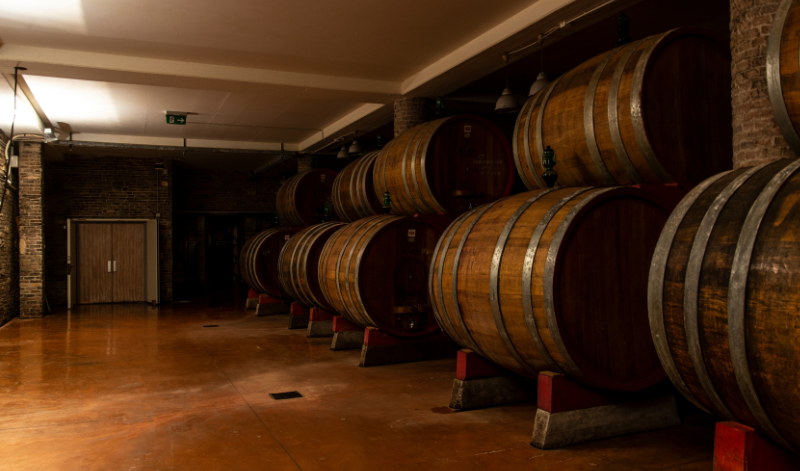
The storage location can also have an influence on the taste of the cask-matured spirit
The influence of storage
The storage of the barrels also has a major influence on the taste of the spirit. Here are some factors that play a role:
1. temperature
Temperature fluctuations cause the wood of the barrel to expand and contract. This enables a better exchange between the spirit and the wood.
2. humidity
High humidity can slow down the maturing process, while low humidity can speed it up. The right balance is crucial for the quality of the spirit.
3. storage location
The storage location can also influence the taste. Barrels stored near the coast can impart salty notes to the spirit, while barrels stored in forests can develop earthy flavors.
The influence of pre-seasoning
However, the type of wood, size and storage of the barrel are not the only factors that influence the taste of a spirit. The pre-seasoning of a wooden barrel also has a significant influence on the taste of a spirit. The wood absorbs aromas from previous fillings and releases them into the new spirit.
For example, if the barrel was previously filled with sherry, wine or bourbon, fruity, sweet or spicy notes can pass into the distillate. Bourbon barrels often impart vanilla and caramel flavors, while sherry barrels add nuances of dried fruit and nuts. This process gives the spirit depth, complexity and a unique character.
Matching products to the article
About the autor:

#goteam
Some things can only be accomplished as a team. Just like this article here! That's why we mark all jointly created articles as editorial contributions. Cheers!
- Liebt: nerdy food & drinks knowledge
- Favorite drinks: Tasting packages! You can enjoy them together
- Empfehlung des Monats: Try our various food boxes
Recent articles
-
21 MarTea or coffee? A world map of hot beverage enjoyment
-
24 FebCoffee drinks from A to Z: The big encyclopedia of all coffee drinks
-
17 FebAll about table salt: Fleur de Sel, sea salt, rock salt & co. - differences, origin & use
-
07 JanDirect juice meets carbon dioxide - why PENG doesn't want to be a soft drink
-
27 AugBetween needle & nose: tattoos, dragons and bananas in a jar
-
03 JulOrange disco on the tongue: the founding story of Satoshi Spirits
-
25 JunFrom retirement project to gourmet institution: the colorful world of the Deheck distillery
-
19 JunHonest voices, real brands: buyers and their choices
-
10 MayClimbing design for children's rooms: Which materials and designs are ideal?


