 Quality instead of quantity!
 9,500 independent products
 No mainstream
 No mainstream here




Why refined sugar is bad for you

The most important facts summarized for you:
- due to its production, refined sugar contains hardly any nutrients
- This turns sugar into "empty calories" that provide quick but not sustainable energy boosts
- Excessive consumption of sugar can have serious health consequences
- Even alternatives to refined sugar such as birch sugar or maple syrup are not really healthier
- For a healthy lifestyle, sugar should be avoided as much as possible
In our fast-paced world, many of us like to reach for fast food, sweet snacks and convenience foods. Why not, after all, it often has to be quick - and many products don't taste bad at all. However, most of these 'convenient' foods often contain large amounts of refined sugar. And this seemingly innocent ingredient can have significant negative effects on your health.
Buying sugar-free foods

- Style: Bone broth
- Flavor: light beef note

- Style: Protein powder

- Style: Olive oil

- Style: Chicken soup
- Flavor: spicy, rich, chicken

- Style: White wine vinegar
- Flavor: fresh

- Style: Bone broth
- Flavor: spicy, rich, chicken

- Style: Olive oil

- Style: Bone broth
- Flavor: spicy, rich, beef

- Style: Chili powder

- Style: Pepper

- Style: Spice mix

- Style: Spice mix

- Style: Pepper

- Style: Pepper

- Style: Nut spread
- Flavor: creamy, peanut
We explore why refined sugar is actually so bad and the long-term health risks it poses. From weight gain to tooth decay to serious metabolic problems, the list of potential harms is long and alarming. Let's find out together why it's worth rethinking your sugar intake and considering healthier alternatives.
What is refined sugar?
You've probably wondered what refined sugar actually is and how it's made. Refined sugar, often simply called white sugar, undergoes an intensive processing procedure. The starting point for conventional white sugar is usually sugar cane or sugar beet.
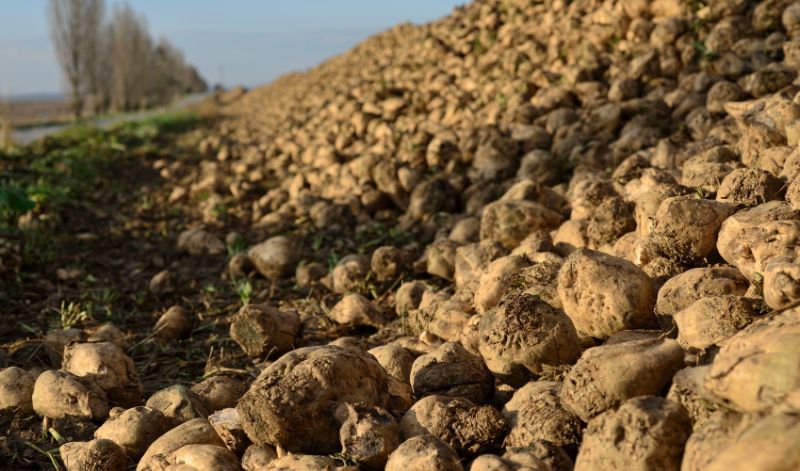
In this country, refined sugar is usually made from sugar beet
The production of refined sugar
In sugar processing, the sugar cane or sugar beet is first cleaned and crushed. The sugar juice is then extracted by pressing or diffusion, in simple terms mixing it with hot water. This juice is then filtered to remove impurities.
Only now does the actual refining process begin: the filtered juice is evaporated until sugar crystals form. These crystals are centrifuged and washed several times to obtain the pure white sugar we are all familiar with.
And this is where the dilemma begins.
The health effects of refined sugar
It is the production method of refined sugar that is responsible for its harmful properties. All the nutrients originally contained in the sugar cane or sugar beet are washed out by the evaporation and repeated washing during the refining process. Only the sugar components remain, i.e. mainly sucrose, as well as some fructose and glucose.
These sugars are so-called 'empty calories'. This means that although they provide a short-term energy boost, it is over just as quickly as it began. Because sugar no longer contains any nutrients worth mentioning, the body has nothing that it can convert into further energy. Our blood sugar therefore skyrockets at lightning speed - but we no longer have a supply to keep it at these lofty heights. The result: food cravings or massive energy lows.
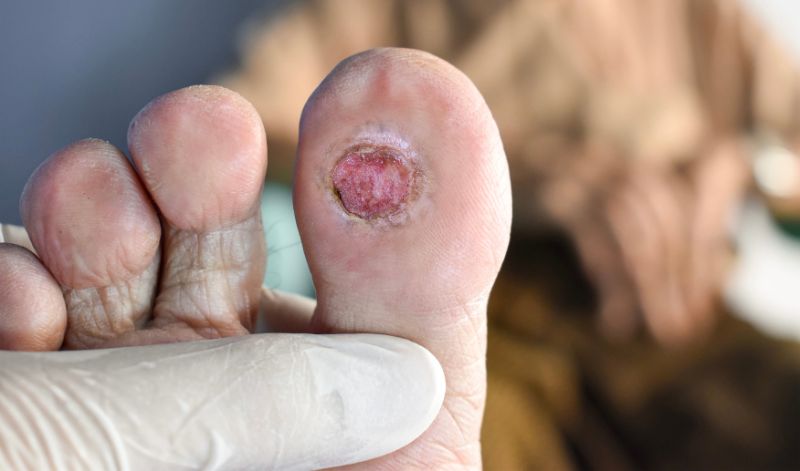
80% of all people with diabetes have pathological skin changes. The so-called 'diabetic foot' is typical
But that's not all. Excessive consumption of refined sugar has other, sometimes long-term, consequences:
- Insulin resistance & type 2 diabetes
- Obesity & secondary diseases
- tooth decay
- addictive behavior
- Depression
Although we are partly aware of the harmfulness of sugar, we do little to regulate our often excessive sugar consumption - partly out of ignorance, partly out of laziness - or also due to a lack of alternatives. But from now on, this should no longer be a reason.
Better alternatives to refined sugar?
There are numerous alternatives to refined sugar on the market. But are they really healthier? In short: generally not. The best, healthiest alternative to refined sugar is therefore unfortunately: no sugar at all. Only then are we really doing something good for our bodies.
But if you still don't want to give up the sweet taste completely, you still have a few options:
For diabetics & others with pre-existing conditions: Xylitol, stevia & co.
The terms xylitol, steviol glycosides or erythritol already give us a hint that these sugar alternatives have not exactly been freshly picked from the tree - even if their colloquial names birch sugar, stevia and xucker might suggest otherwise. Although the sweeteners are found in natural products, they have to be extracted and processed to such an extent that not much of the natural product remains.
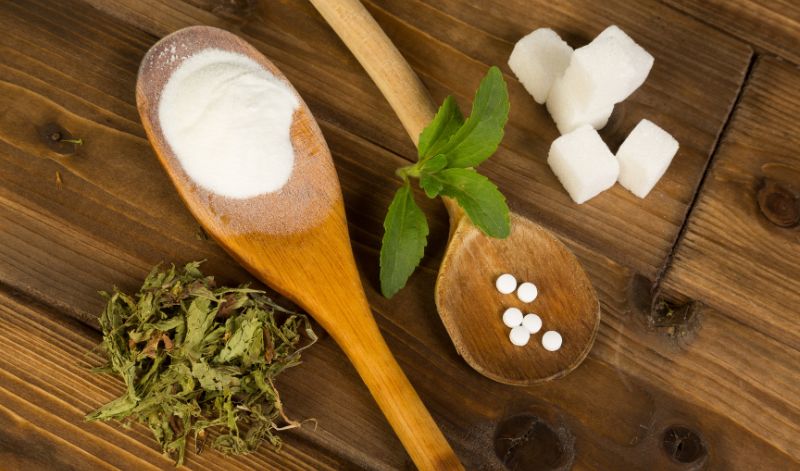
As stevia, xylitol and the like have virtually no calories, these sugar alternatives are often used by diabetics or obese people. However, these sweeteners can also cause other health problems
Nevertheless, birch sugar, stevia & co. can be a good alternative to sugar, especially for diabetics and other people with pre-existing conditions such as obese people, because: These sweeteners contain virtually no calories and therefore have no effect on blood sugar levels.
But here too, the dose makes the poison. Even if you don't have to worry about a rise in blood sugar levels, sweeteners can have other health effects, such as causing bloating and diarrhea. It was only recently revealed that xylitol is also suspected of causing strokes and other serious heart conditions.
For naturals: Honey, coconut blossom sugar, maple syrup & agave syrup
If you want to sweeten with less processed products, you may stumble across supposedly healthier sugar alternatives such as honey, agave syrup, maple syrup or coconut blossom sugar. Although these products are generally less processed and contain slightly more nutrients than refined sugar, their content is still negligible. In addition, natural sweeteners - just like refined sugar - have a lot of calories.
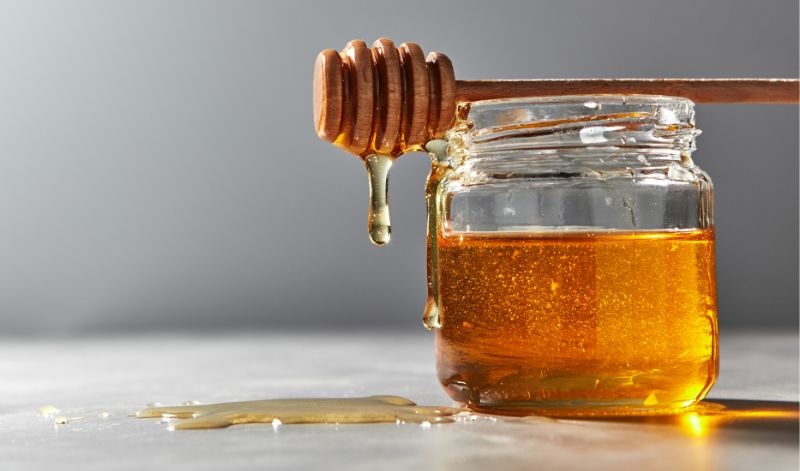
If you are looking for a natural alternative to refined sugar, it is best to use regional honey. It is the least harmful to health and the environment - at least compared to all other sweeteners
Coconut blossom sugar, maple syrup and agave syrup are not good for the planet either, as the raw materials for these products tend to grow on the other side of the Atlantic. If you want to do something good for the environment and avoid refined sugar, it's best to use local honey. It also has antibacterial properties and may help the body in other ways.
Tips for reducing sugar consumption in everyday life
If you really want to ban the sweet stuff from your everyday life after all the bad news about sugar, here are a few practical tips:
1. slow weaning instead of cold turkey
Anyone who already consumes sugar in excess should wean their body off it slowly- as with any other addiction. This gives the body time to adapt in the long term instead of being confronted with the deficiency immediately. Instead, opt for foods with less sugar and only use half the specified amount of sugar in your next cake recipe, for example. This way you can reduce your consumption step by step.
Learn to listen to your body.
When your body calls for sugar, it doesn't actually want anything sweet, but above all: energy. However, over time it has learned to equate sugar with energy. As a result, it craves chocolate or jelly babies when all it really needs is an energy boost.
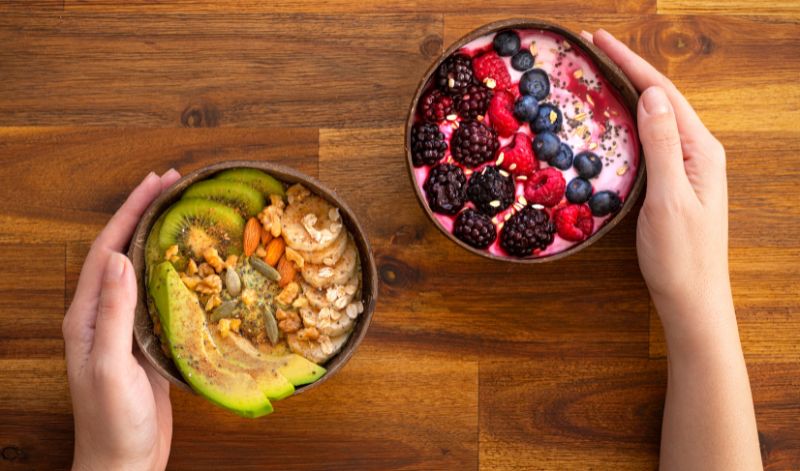
"If you feel a craving for sweets, it's best to turn to nutritious sources of energy such as fresh fruit or nuts.
So the next time you crave something sweet, simply try to find another, healthier source of energy, such as fresh fruit, vegetables or a few nuts. Over time, the body will forget the "sugar = energy" link and instead call for a bowl of blueberries or a handful of nuts, as these energy sources are much more abundant than sugar. Sounds crazy, but it really works.
Avoid hidden sugar in food
A real game changer is reading labels! Many ready-made products contain hidden sugar under various names such as glucose syrup or fructose. Sugar additives are also often hidden behind technical abbreviations such as E 954 (saccharin) or E 951 (asarpatam). The more often you read labels, the quicker you will notice unwanted additives over time. So be aware and consciously choose products without added sugar.
With these simple tips, you can reduce your sugar consumption in everyday life and feel better - without sacrificing enjoyment!
Matching products to the article
About the autor:

Katalog & Marketing Managerin

Für mich geht nichts über das Entdecken kleiner Manufakturen. Ob das der Micro Craft Brauer aus Bayern oder die sächsische Brennerei ist, die es bereits seit Jahrzehnten gibt - hauptsache klein, regional verwurzelt und mit Sinn für's Handwerk!
- Liebt: frische Luft, ihren Hund & Vinyl
- Favorite drinks: wechseln mit so ziemlich jedem Glas...
- Empfehlung des Monats: Alkoholfreier Gin. Der EASIP Fields holt den Frühling ins Glas!
Recent articles
-
18 JulFrom Whiskey to Delicatessen to Coffee: Why Some Gifts Are Still Remembered Years Later
-
28 JunVintage Lamps as an Interior Design Trend
-
25 JunHausberg Single Malt Whiskey for Collectors and Connoisseurs—the second cask has arrived!
-
21 MarTea or coffee? A world map of hot beverage enjoyment
-
24 FebCoffee drinks from A to Z: The big encyclopedia of all coffee drinks
-
17 FebAll about table salt: Fleur de Sel, sea salt, rock salt & co. - differences, origin & use
-
07 JanDirect juice meets carbon dioxide - why PENG doesn't want to be a soft drink
-
27 AugBetween needle & nose: tattoos, dragons and bananas in a jar
-
03 JulOrange disco on the tongue: the founding story of Satoshi Spirits


